
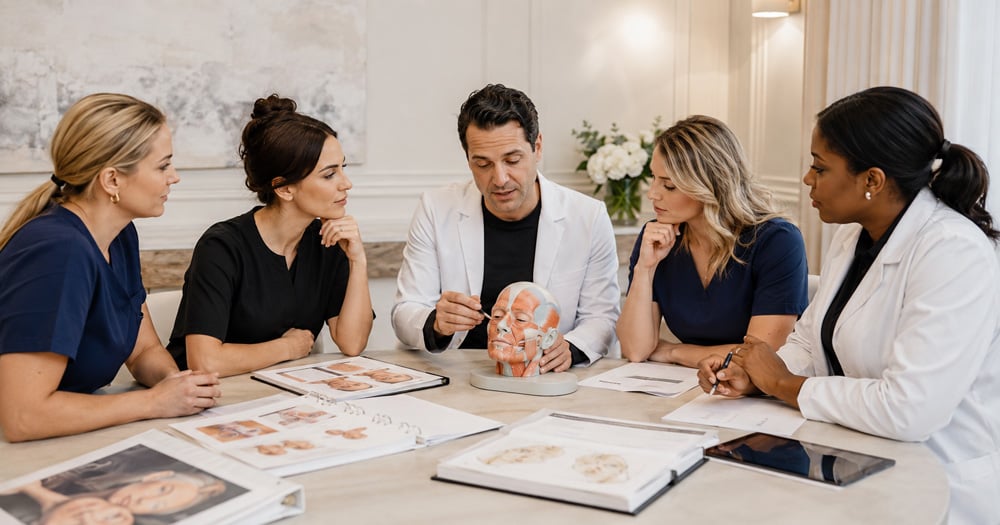
Direct answer: Quebec nurse injectors need more than a course certificate. This guide explains how individual orders, patient assessment, physician availability, professional designation, insurance, training, and the CMQ and OIIQ framework affect practice. Compare Botox training for nurses in Quebec after reviewing these requirements.
Nurses in Aesthetic Medicine in Quebec: CMQ and OIIQ Guidelines, Obligations, and OpportunitiesKey Takeaways for Nurses in Aesthetic Medicine in Quebec
- Aesthetic medicine is regulated healthcare, and nursing obligations continue to apply in every clinic and business model.
- Registered nurses, IPSs, and auxiliary nurses do not have interchangeable scopes or assessment responsibilities.
- Nurse-administered aesthetic treatment generally requires a patient-specific individual order following an in-person evaluation by an authorized prescriber.
- A competent physician must be accessible and able to be with the patient within 15 minutes after an injection. Dentist-issued orders follow the ODQ’s separate on-site requirements.
- Training does not independently expand scope, create prescribing authority, or authorize independent practice.
How CMQ and OIIQ Guidelines Affect Quebec Nurse Injectors
The CMQ’s aesthetic-medicine guidance establishes core medical requirements involving patient evaluation, individualized treatment planning, individual orders, physician availability, complication management, and interprofessional practice. The OIIQ framework defines the registered nurse’s assessment, competence, documentation, independence, and deontological responsibilities within that medical structure. Nurses must also consider OIIAQ requirements for auxiliary nurses and ODQ requirements when treatment is ordered by a dentist.
Educational reference for registered nurses (infirmières), Nurse Practitioners (infirmières praticiennes spécialisées, IPS), and auxiliary nurses (infirmières auxiliaires) in Quebec. This article does not constitute legal advice, an official interpretation by any professional order, or authorization to perform any procedure. Always confirm current requirements with the OIIQ, OIIAQ, your insurer, and qualified legal counsel.
The aesthetic medicine market in Quebec has changed significantly over the past decade. What was once a niche offering in a handful of specialized clinics has become a more widely available healthcare service across the province, including Montreal, Quebec City, Sherbrooke, and smaller communities. Registered nurses across Quebec now participate in botulinum toxin A injections, dermal filler treatments, platelet-rich plasma protocols, and microneedling sessions as part of professional practice arrangements.
That growth has also attracted the attention of the regulatory bodies responsible for protecting the public. In 2024, the Collège des médecins du Québec (CMQ) and the Ordre des infirmières et infirmiers du Québec (OIIQ) issued a joint advisory flagging specific abuses: physicians issuing orders without evaluating patients, nurses injecting without adequate supervision, clinics operating without the conditions to manage complications. In November 2025, four professional orders, the CMQ, the Ordre des dentistes du Québec (ODQ), the OIIQ, and the Ordre des infirmières et infirmiers auxiliaires du Québec (OIIAQ), announced a joint project to build a common framework for aesthetic medicine practice across all professions. That framework is expected during 2026.
The message for nurses who want a serious, sustainable career in aesthetic medicine is clear. The practice environment is tightening, the regulatory framework is evolving, and the practitioners who will thrive in this market are those who understand their obligations in depth, train properly, structure their practice compliantly, and stay current as the rules develop.
This article covers all of it: the professional and legal framework that governs nurse injectors in Quebec; the distinct roles of registered nurses, Nurse Practitioners or IPSs, and auxiliary nurses; the clinical obligations that apply before and during every patient encounter; the unresolved medical-aesthetics questions specific to IPS prescribing and medical-director roles; the career and business models available to nurses; the insurance and deontological requirements; the opportunities that exist in this market; and what the coming inter-order framework may mean for nursing practice.
Aesthetic Medicine Is Healthcare, A Legal Classification, Not a Statement of Preference
Before addressing obligations and opportunities, the foundational principle of Quebec’s regulatory framework needs to be stated clearly: aesthetic medicine is medicine.
The CMQ defines aesthetic medicine as any non-surgical medical technical act performed using an instrument, substance, injectable product, or energy-based device, with the principal aim of modifying a patient’s appearance for aesthetic purposes, to the exclusion of therapeutic or reconstructive goals. This definition covers botulinum toxin A injections, hyaluronic acid dermal fillers, biostimulators, platelet-rich plasma, microneedling, laser treatments, intense pulsed light (IPL), radiofrequency, ultrasound, and chemical peels of medical grade.
The fact that these services are performed in clinics that look like spas, that patients pay out of pocket, that marketing language borrows heavily from the beauty industry, and that the treatments are not covered by Quebec’s health insurance plan does not change what they are legally: medical acts. When a nurse injects a patient’s face, that nurse is performing a medical act under a physician’s individual order. The clinical risks are real. The professional obligations are significant.
This classification creates the entire framework that follows. Nurses who understand that they are healthcare practitioners performing medical acts, not estheticians offering a premium beauty service, are better prepared to practise safely and to build careers that withstand regulatory scrutiny.

How Quebec’s Professional Framework Works, The Four Orders and What Each Controls
Quebec regulates health professionals through a system of professional orders, each with specific authority over the members of their profession. In aesthetic medicine, four orders are directly relevant to nursing practice.
The Collège des médecins du Québec (CMQ) governs physicians and sets the rules under which aesthetic medicine is practised. Even though the CMQ does not directly regulate nurses, its rules set the conditions under which nurses are authorized to act, because a nurse’s authority to administer aesthetic injections flows from a physician’s individual order. The CMQ’s 2020 Guide d’exercice on aesthetic medicine, its November 2023 clarifications, and the May 2024 joint advisory with the OIIQ are the primary sources of the framework nurses operate within.
The Ordre des infirmières et infirmiers du Québec (OIIQ) governs registered nurses. The OIIQ sets the scope of practice, the competence standards, the deontological obligations, and the conditions under which nurses may perform reserved acts in aesthetic medicine. The OIIQ has issued guidance on aesthetic medicine practice, participated in the joint CMQ-OIIQ advisory, and continues to monitor developments in this field.
The Ordre des infirmières et infirmiers auxiliaires du Québec (OIIAQ) governs auxiliary nurses. The OIIAQ sets a narrower scope of practice for its members, with specific limitations that affect how auxiliary nurses may participate in aesthetic medicine.
The Ordre des dentistes du Québec (ODQ) does not directly govern nurses, but its March 2025 guide on botulinum toxin A and filling agents has created a new category of prescriber who can now issue orders to nurses for injectable aesthetic treatments. A nurse working with a dentist prescriber is subject to the same fundamental requirements as one working with a physician.
The inter-order project announced in November 2025, bringing all four orders together to develop common parameters, reflects the genuinely interprofessional nature of modern aesthetic medicine practice. Physicians, dentists, nurses, and auxiliary nurses all interact within the same clinical model, and common parameters should make roles and responsibilities clearer for everyone.

The Regulatory Timeline: How Quebec Got to Where It Is Today
Understanding the regulatory history of aesthetic medicine in Quebec helps nurses understand why the current framework exists and where it is likely to go.
In 2016, the CMQ commissioned a working-group report on aesthetic medicine that identified significant risks in the existing practice environment and made seven recommendations. Chief among them: every patient seeking aesthetic injections must first receive an individual medical evaluation by a physician, who establishes an individualized treatment plan. The treatments can then be administered by the physician or be the subject of an individual order to a nurse or auxiliary nurse.
In May 2017, the new framework took effect. From that date, collective orders for aesthetic injections were prohibited. The individual order requirement became the governing rule.
In August 2020, the CMQ published a comprehensive Guide d’exercice on aesthetic medicine, 66 pages covering physician training, patient evaluation, individual orders, prescribing rules, the 15-minute on-site availability requirement, record keeping, advertising, and interprofessional practice. This guide remains the governing document for physician practice in aesthetic medicine and the foundation of the framework nurses work within.
In November 2023, the CMQ published a clarifying article on observations and responsibilities in aesthetic medicine, reinforcing key requirements and adding specifics about the 15-minute on-site availability rule and the service corridor concept.
In May 2024, the CMQ and OIIQ published a joint advisory warning about “dérives”, deviations from the established rules, that had been brought to the attention of both orders through a Radio-Canada investigation. Physicians issuing orders without ever evaluating patients. Clinics operating without the conditions to manage complications. Nurses injecting without adequate supervision. The joint advisory stated clearly that these practices “comportent des risques significatifs pour la patientèle” and that both orders would take action.
In March 2025, the ODQ published its guide on botulinum toxin A and filling agents for dentists, opening a new pathway for dentists to prescribe these treatments and issue orders to nurses.
In June 2025, a Quebec coroner’s report on a patient death following cosmetic surgery under sedation at a private clinic was made public, drawing renewed attention to safety standards in the private aesthetic medicine sector.
In November 2025, the CMQ, ODQ, OIIQ, and OIIAQ issued a joint press release announcing a collaborative initiative to build common parameters for aesthetic medicine practice across all four professions. The work was expected to conclude during 2026. As of July 2026, that common framework has not yet been published.
Registered Nurses, Nurse Practitioners, and Auxiliary Nurses: Why the Distinctions Matter
Quebec’s nursing profession includes registered nurses, Nurse Practitioners who hold an IPS specialist certificate, and auxiliary nurses governed by a separate professional order. Their legal scopes are not interchangeable. The distinctions affect assessment, diagnosis, prescribing, treatment planning, administration of ordered substances, professional independence, and the practice structures that may be available in aesthetic medicine.
Registered Nurses (Infirmières autorisées, OIIQ)
Registered nurses are regulated by the OIIQ under the Loi sur les infirmières et infirmiers (RLRQ c. I-8). The core scope of practice for a registered nurse includes:
- Evaluating the health status of a person
- Determining and ensuring the implementation of nursing care and medical treatment plans
- Providing nursing and medical care to maintain and restore health and prevent illness
- Administering and adjusting medications and other substances when they are the subject of an order
- Initiating certain treatment measures within the parameters of an individual order
Article 36 of the Loi sur les infirmières et infirmiers provides the registered nurse with several specific reserved activities, including the ability to evaluate a symptomatic person’s physical condition, to initiate diagnostic and therapeutic measures according to an order, and to adjust medications when authorized by an order.
In aesthetic medicine, this scope means a registered nurse:
- May administer aesthetic injections, including botulinum toxin A, dermal fillers, biostimulators, and PRP, under a valid individual order.
- Must conduct a pre-session nursing assessment before each treatment session.
- May adjust a treatment plan only within the parameters of an explicit adjustment protocol included in the order.
- Has the clinical and legal authority to evaluate whether a patient can safely receive the prescribed care on a given day.
Nurse Practitioners (Infirmières praticiennes spécialisées, IPS)
An IPS is a registered nurse who also holds a specialist certificate in an IPS class recognized by Quebec regulation. The IPS role includes advanced nursing practice and the exercise of defined medical activities within the conditions, modalities, specialty class, competence, and regulatory framework that apply to that practitioner.
Section 36.1 of the Loi sur les infirmières et les infirmiers provides that an IPS may, when authorized by regulation and according to the applicable specialty class, diagnose diseases; prescribe diagnostic examinations; use certain invasive or risk-bearing diagnostic techniques; determine medical treatments; prescribe medications and other substances; prescribe medical treatments; and use invasive or risk-bearing medical techniques or treatments.
These statutory activities are broader than the activities of a registered nurse who is not an IPS. However, the existence of general diagnosis and prescribing authority does not automatically answer every scope question in every clinical sector. The IPS must still act within the authorized specialty class, applicable regulations, individual competence, professional standards, insurance coverage, and any sector-specific framework.
Medical aesthetics requires a separate and cautious analysis. As of July 2026, no specific public OIIQ statement identified in the official materials confirms that an IPS may independently evaluate an aesthetic patient, prescribe botulinum toxin A or dermal fillers for aesthetic use, issue the order to themselves or another injector, and operate without the physician or dentist pathway described elsewhere in this article.
The exact application of IPS diagnosis and prescribing authority to independent medical-aesthetics prescribing, self-ordering, and the role commonly described as medical director remains unresolved. Until the OIIQ issues a specific medical-aesthetics position or provides written clarification, IPSs should not be told that training alone gives them independent prescribing or medical-director authority in aesthetic medicine.
Until the OIIQ publishes a clear medical-aesthetics position or provides written confirmation for the practitioner’s circumstances, an IPS should not assume that general statutory prescribing authority permits independent aesthetic prescribing, self-authorization, or an independent medical-director role. Thus, the IPS should follow the patient-specific medical-aesthetics pathway described in this article, including an individual order from an authorized physician or, where the ODQ framework applies, an appropriately trained dentist.
This interpretation does not erase the IPS’s advanced competencies. An IPS continues to exercise professional judgment, assess the patient within the IPS role, recognize contraindications, refuse unsafe care, document appropriately, and practise within competence. The unresolved question is whether the IPS may replace the physician or dentist as the independent medical-aesthetics prescriber and responsible medical authority.
An IPS considering aesthetic-medicine training should obtain written clarification before relying on a proposed business or clinical model. Contact the OIIQ and ask to be directed to the department responsible for professional development and professional support. Do not rely only on an informal telephone answer, a training provider’s assurance, or another practitioner’s interpretation.
The IPS should ask the OIIQ to address the following questions in writing:
- Does my IPS specialty class authorize me to determine and prescribe the specific aesthetic treatment I intend to provide?
- May I prescribe the aesthetic injectable and personally administer it to the same patient?
- May I issue an order to another nurse for the treatment?
- Does the current medical-aesthetics framework still require physician or dentist involvement for this treatment?
- May an IPS serve as the responsible medical authority or medical director of the clinic, and under what conditions?
- What on-site availability, emergency coverage, service-corridor, documentation, and follow-up requirements apply?
- Does my professional liability coverage expressly include the proposed prescribing, injecting, and clinic-governance activities?
Training does not resolve these questions. No course, including AMEQ training, can expand an IPS’s legal scope, create prescribing authority that has not been confirmed, or guarantee the right to operate independently. The IPS must confirm the regulatory position, competence requirements, and insurance coverage before treating patients or building a clinic model around independent prescribing.
Auxiliary Nurses (Infirmières auxiliaires, OIIAQ)
Auxiliary nurses are regulated by the OIIAQ under the Code des professions (RLRQ c. C-26). The defined scope for an auxiliary nurse is described as contributing to the evaluation of a person’s health status and to the implementation of the care plan, providing nursing and medical care to maintain health, restore it, and prevent illness, and providing palliative care.
Article 37.1(5°)(f) of the Code des professions specifies that an auxiliary nurse may administer medications and other substances by routes other than intravenous when they are the subject of an individual order.
The critical limitation: an auxiliary nurse cannot evaluate the health status of a person. The scope says “contributing to” the evaluation, not performing it. This is not a technicality. It is a fundamental boundary.
In aesthetic medicine, this means:
An auxiliary nurse may administer injectable aesthetic treatments under a valid individual order. Because the auxiliary nurse contributes to evaluation rather than independently evaluating the patient’s health status, an authorized professional must complete the required patient evaluation and treatment plan. An evaluation is required before each treatment session, the treatment must occur in an environment appropriate to the technique, and a physician must be accessible and available to manage an adverse reaction.
This distinction shapes the practice models available to auxiliary nurses in aesthetic medicine. An auxiliary nurse cannot independently replace the professional who is authorized to evaluate, diagnose, prescribe, or establish the treatment plan. The auxiliary nurse remains individually responsible for verifying the order, practising within competence, monitoring the patient, documenting care, and escalating concerns.
This is not a criticism of the auxiliary nurse’s clinical skills. It reflects the legal definition of the profession’s scope and the requirement for interprofessional collaboration in medical aesthetics.

The Individual Order: The Cornerstone of Every Nurse Injector’s Practice
This is the most important concept in this entire article. If you remember nothing else, remember this: in Quebec, a nurse cannot legally administer aesthetic injections without a valid individual order from an authorized prescriber who has first evaluated the patient in person.
Why Collective Orders Are Prohibited
A collective order is a standing order that authorizes a nurse or group of nurses to perform defined treatments for any patient who meets certain general criteria. Collective orders are used appropriately in many healthcare contexts, for example, for routine vaccinations or certain emergency protocols. They are efficient and appropriate where the clinical situation is well-defined and standardized.
They are not appropriate for aesthetic medicine, and they have been explicitly prohibited since May 2017. The reason is clear: aesthetic medicine requires an individualized diagnosis and an individualized treatment plan. No two patients have the same anatomy, the same medical history, the same contraindications, or the same aesthetic goals. A standing protocol that bypasses the individual evaluation step creates unacceptable clinical risk.
The May 2024 CMQ-OIIQ joint advisory was unequivocal: “les ordonnances collectives autorisant les infirmières à réaliser des injections à des fins esthétiques ne sont plus autorisées.” This is not a soft recommendation, it is a firm rule, and violations are treated as deontological failures by the professional bodies.
If you are currently working under any arrangement where no physician has evaluated each patient individually before your sessions, or where a standing protocol authorizes you to inject without a patient-specific order, your practice is not compliant.
What a Valid Individual Order Must Contain
Under the Règlement sur les normes relatives aux ordonnances faites par un médecin (RLRQ c. M-9, r. 25.1), a valid individual order must include:
- The prescribing physician’s name (in print), permit number, and contact information including telephone number
- The patient’s identifying information (at minimum, name and date of birth)
- The date the order was written and its validity period
- The specific injection sites, with the product name and quantity for each site
- The frequency of treatment and total duration if applicable
- Relevant contraindications and stop conditions
- The name of the nurse or group of nurses authorized to execute the order
- Information needed to ensure follow-up and complication management, including the prescriber’s contact information and the service corridor details
For orders authorizing a nurse to initiate or adjust treatment (rather than simply execute a fixed plan), the order must also include an explicit adjustment protocol, the conditions under which the nurse may modify the plan, the parameters of those modifications, and the conditions that require the nurse to refer the patient back to the prescribing physician.
This is not a brief form. A properly written individual order for aesthetic medicine is a clinical document that specifies the treatment in detail for this patient, on this date, under these specific conditions. The physician must have evaluated the patient in person before writing it.
Orders from Dentists
Since March 2025, Quebec dentists who have completed the ODQ’s progressive training pathway may also issue individual orders to nurses for the botulinum toxin A and dermal filler treatments within their authorized scope. A nurse receiving an order from a dentist is subject to the same fundamental requirements as one receiving an order from a physician: the order must be valid, the dentist must have evaluated the patient in person, the dentist must be physically present at the treatment location, and the nurse’s pre-session assessment obligations are unchanged.
Nurses who want to work with dentist prescribers should understand the ODQ’s scope and training levels, because a dentist’s ordering authority is limited to the procedures within their completed training level. A nurse cannot execute a dentist’s order for procedures that fall outside the dentist’s authorized scope.
Reading and Verifying the Order Before You Act
A nurse has a professional obligation to verify the order they are executing before beginning treatment. This is not a formality. You are a healthcare professional, not a technician following instructions without clinical judgment. Before beginning any session, verify:
- That the order is signed and dated by an authorized prescriber
- That the prescriber’s permit number is present (you can verify permit status with the CMQ or ODQ online)
- That the order is patient-specific and identifies the patient you are about to treat
- That the order specifies the injection sites and doses you are about to administer
- That the prescriber’s contact information is on the order
- That you are named as the authorized executor
- That the order is within its validity period
- That the treatment falls within your own training and competence
If the order is incomplete, if the physician named cannot be identified, or if the treatment parameters are vague or missing, you should not proceed. Your professional responsibility is to refuse to execute an order that you cannot safely fulfill.
The Right, and Obligation, to Refuse
Both the OIIQ and the OIIAQ recognize a nurse’s professional right and obligation to refuse to perform an act they consider unsafe, incomplete, or outside their competence. If the conditions for safe practice are not met, if the physician is not on site, if the emergency kit is absent, if the order is incomplete, if you have not received training in the procedure being ordered, refusing to proceed is the professionally correct choice.
This is not an administrative right. It is a deontological obligation. A nurse who proceeds with an unsafe injection session cannot later claim that they were following instructions from the clinic owner or the prescribing physician. Professional responsibility is individual.

The Complete Patient Pathway: What Must Happen Before You Inject
A compliant nurse injection session in Quebec does not begin when the patient sits down in the treatment chair. It begins much earlier, with the physician’s evaluation of the patient. Understanding the complete pathway from first contact to post-treatment follow-up is essential.
Step 1: In-Person Physician Evaluation
The first step in any patient’s aesthetic treatment journey in Quebec must be a real, in-person medical evaluation by a physician (or, for BoNT-A and fillers within the ODQ’s scope, by a dentist who has completed the required training level). This evaluation must be done in person. A review of photographs, a video consultation, a telephone conversation, or a review of an intake form completed by the patient does not constitute a medical evaluation under Quebec’s regulatory framework.
The CMQ’s 2020 guide is explicit: “le médecin doit évaluer le patient en personne. Une évaluation à distance, par voie de télémédecine, ne répond pas aux exigences d’une pratique adéquate et sécuritaire pour ce type d’exercice.”
This rule has been one of the most commonly violated in Quebec’s aesthetic medicine sector. The May 2024 CMQ-OIIQ joint advisory specifically cited “des médecins n’ayant jamais évalué les patients avant de leur émettre une ordonnance d’injections” as one of the abuses that prompted the advisory.
The physician’s evaluation must include a clinical examination of the patient, a review of relevant medical history and contraindications, a discussion of the patient’s aesthetic goals and expectations, an assessment of whether the proposed treatment is appropriate, and the formulation of a diagnosis and treatment plan.
Step 2: Diagnosis and Individualized Treatment Plan
Following the evaluation, the physician must establish a diagnosis and develop a treatment plan specific to this patient. In aesthetic medicine, the “diagnosis” is typically the physician’s clinical assessment of the patient’s condition, the anatomical presentation, the patient’s history, the relevant contraindications, and the therapeutic or aesthetic indication for treatment.
The treatment plan must specify the injection sites, the products to be used at each site, the doses, the treatment frequency, and any relevant special considerations for this patient. For botulinum toxin A treatments, the plan should include the specific muscles to be treated, the units per injection point, and the total units planned. For dermal fillers, it should specify the anatomical regions, the product type, the volumes, and the technique to be used.
This level of specificity matters because the nurse who executes the treatment is bound by what the plan specifies. A vague plan creates clinical risk and professional exposure for both the physician and the nurse.
Step 3: Written Informed Consent
Before any treatment, the patient must give informed written consent. In aesthetic medicine, consent must be particularly comprehensive because aesthetic procedures are not medically required, they are elective. Under the Code civil du Québec, for care that is not required by the patient’s health state, the patient must be informed of all possible risks, even if rare, and the consent must be given in writing.
Informed consent in aesthetic medicine must cover: the nature of the proposed treatment, the specific products to be used and their known risks, the possible adverse effects including rare and serious ones, the likelihood and duration of each possible effect, the alternatives to the proposed treatment, the consequences of not treating, and the follow-up obligations after treatment.
The consent must be obtained by the physician, not delegated to clinic staff or to the nurse. This is a non-delegable obligation. A clinic intake form filled out without a physician present does not constitute valid informed consent.
Step 4: The Individual Order
After evaluating the patient, establishing the diagnosis, and obtaining consent, the physician writes the individual order that authorizes the named nurse to administer the prescribed treatment. This order is the nurse’s legal authority to act.
Step 5: The Nurse’s Pre-Session Assessment (For Registered Nurses)
Before beginning each treatment session, a registered nurse must evaluate the patient to confirm there are no contraindications to receiving the prescribed care on that particular day. This is a distinct clinical obligation that belongs to the nurse, not to the physician.
The pre-session assessment typically includes: confirming the patient’s identity, reviewing the individual order, asking about any changes in the patient’s health status since the physician’s evaluation, checking for contraindications to the specific treatment on that day (recent illness, new medications, changes in skin condition), and confirming that the patient still consents to the treatment.
If the nurse’s assessment reveals that the patient’s condition has changed in a way that creates a contraindication, or if there is any doubt about the safety of proceeding, the nurse must not administer the treatment and must refer the patient back to the prescribing physician for reassessment. The nurse cannot make independent clinical decisions about modifying or proceeding with a treatment that has changed since the physician’s evaluation, except within the parameters of an explicit adjustment protocol in the order.
This pre-session assessment is the registered nurse’s professional responsibility. It is one of the clearest expressions of why registered nursing education matters in this context: performing this assessment requires clinical judgment, anatomy knowledge, and the ability to recognize contraindications and adverse conditions.
For auxiliary nurses: the physician must perform this pre-session assessment, not the auxiliary nurse. The auxiliary nurse may contribute to surveillance, for example, by observing and reporting any post-injection changes to the physician, but cannot evaluate the patient’s health status independently.
Step 6: Executing the Treatment Within the Order’s Parameters
The nurse administers the treatment according to the individual order. The treatment must remain within what the order specifies. A nurse may not independently decide to treat an additional site, use a different product, change the dose at a given site, or modify the technique unless there is an explicit adjustment protocol in the order authorizing that specific type of modification.
If the nurse identifies during the session that a modification might be beneficial, for example, that a different amount of product at a given site would produce a better result, the nurse must not act on that clinical judgment independently. The appropriate step is to note the observation and communicate it to the prescribing physician for the next evaluation and order update.
The nurse’s role in executing the treatment is not merely technical. It requires clinical skill, anatomical knowledge, sterile technique, careful observation of the patient’s response, and the judgment to stop and escalate if something is wrong.
Step 7: Post-Treatment Documentation
The nurse must document the treatment in the patient’s clinical file. Documentation should include: the date and time of the session, the treatment administered (products, volumes, sites), the patient’s condition before and after treatment, any adverse observations, any deviations from the order and the reason for them, the nurse’s name and signature, and any communications with the prescribing physician.
Documentation matters for several reasons: it is a professional and legal obligation; it creates the record that allows continuity of care; it protects the nurse in the event of a complaint or investigation; and it is the physician’s primary source of information about how the treatment was executed.
Both the nurse and the physician are responsible for ensuring follow-up in the event of complications.

Physician Availability Within 15 Minutes: What This Means for Your Practice Model
One of the most important, and most misunderstood, requirements in Quebec’s aesthetic medicine framework concerns access to a physician after an injection.
The CMQ states that the physician who wrote the aesthetic injection order, or another physician responsible at the clinic, must be accessible and available to be with the patient within 15 minutes following an injection procedure. The physician must be competent to assess and manage a complication and administer urgent treatment, including an antidote when required.
This does not necessarily mean the physician must already be inside the treatment room or clinic building before every physician-ordered injection begins. It means the clinic’s organization must make it realistically possible for the responsible physician to reach and attend the patient within 15 minutes. Telephone or video availability alone is not enough when the physician cannot physically attend within that period.
The reason is clinical. Some aesthetic injection complications, particularly vascular occlusion following dermal filler treatment, require rapid assessment and treatment. Urgent medication and supplies must be available, and the clinic must have a functional service corridor when escalation is required.
This requirement has direct consequences for nurse injectors:
- Before beginning a session, confirm which competent physician is responsible and how that physician will be with the patient within 15 minutes if needed.
- Confirm that urgent treatment supplies, including hyaluronidase when dermal filler is administered, are immediately accessible and not expired.
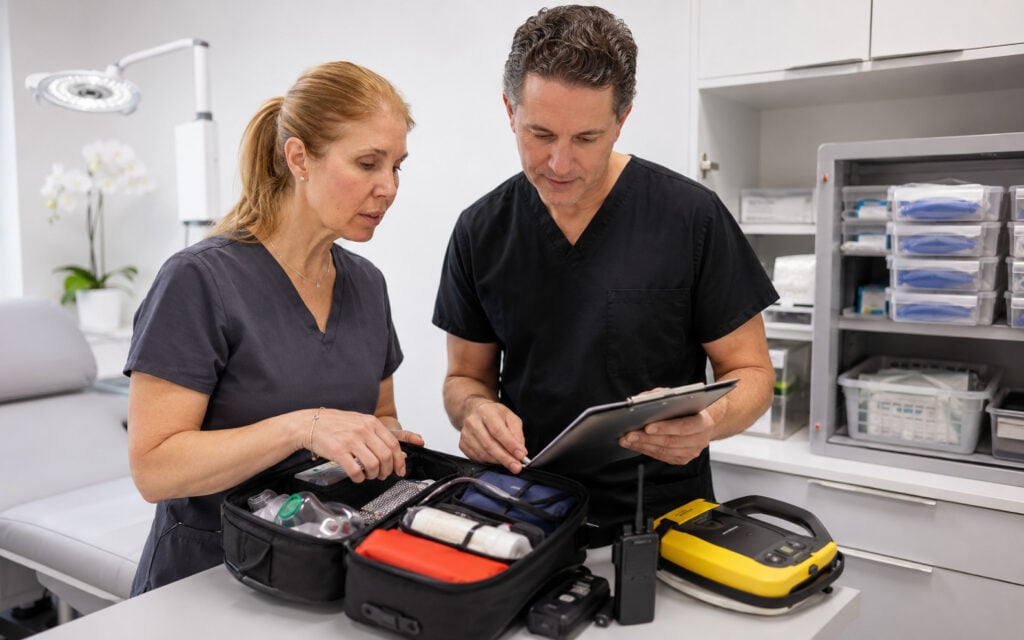
- Confirm that the clinic’s emergency kit and defibrillator are present, functional, and appropriate to the services offered.
- Confirm that a documented, functional service corridor and transfer process are available if the responsible physician cannot manage the complication.
If these conditions are not met, the nurse has the right and professional obligation to refuse to begin treatment.
The 15-minute rule affects the business models available to nurse injectors. A nominal or remote physician affiliation is not sufficient when the physician cannot physically attend the patient within the required period. When the order is issued by a dentist under the ODQ framework, the dentist’s separate on-site presence requirements must also be satisfied.
Emergency Readiness: Your Obligations When Something Goes Wrong
Complications in aesthetic injectable medicine are rare but real. Vascular occlusion from filler injection can cause tissue necrosis. Anaphylaxis can occur from any injectable product. Haematomas, infections, and nerve effects are also possible. A nurse who practises aesthetic injections must be trained, prepared, and equipped to respond appropriately when complications arise.
Your obligations in an emergency include:
Stopping the treatment immediately when you identify a sign of a complication or adverse event.
Initiating the appropriate response based on the complication, for vascular occlusion, this means immediately alerting the physician and ensuring hyaluronidase is administered without delay; for anaphylaxis, this means initiating anaphylaxis response protocol and calling emergency services.
Keeping the physician immediately informed of any adverse observation during or after a session.
Documenting the incident in detail in the patient’s clinical file.
Following up with the patient after the session, a nurse’s obligations do not end when the patient leaves the clinic.
Reporting to the prescribing physician and ensuring the patient has access to appropriate follow-up care.
Your training in complication recognition and management is not a theoretical exercise. It is a clinical competency that you are expected to have before you begin practising aesthetic injections, and that you are expected to maintain through continuing education.
Deontological Obligations: What the OIIQ’s Code of Ethics Requires
Beyond the specific regulatory requirements for aesthetic medicine, registered nurses in Quebec are bound by the Code de déontologie des infirmières et infirmiers (RLRQ c. I-8, r. 9). Several provisions of the Code are particularly relevant to aesthetic medicine practice.
Competence (art. 18): The nurse must practise according to generally recognized practice standards and scientific principles, keeping competencies up to date and developing them continuously. This means nurses in aesthetic medicine must not offer services beyond their training, must stay current with evolving standards, and must seek additional training when expanding their scope.
Negligence in medication administration (art. 45): The nurse must not be negligent in administering, adjusting, or initiating medications and other substances. Combined with the requirement to comply with the Norme d’exercice on safe medication administration (notably rule 8.1), this establishes a high standard for how aesthetic injectable products must be handled.
Professional independence (art. 19): The nurse must maintain professional independence. A nurse who allows clinic financial pressures, management directives, or commercial incentives to override clinical judgment is compromising professional independence. This is particularly relevant in business models where nurses are pressured to treat patients quickly, skip assessments, or ignore unsafe conditions.
Advertising (art. 31-34): The Code places restrictions on nurse advertising, prohibiting misleading claims, false comparisons, and statements designed to solicit in an insistent or inappropriate way. OIIQ guidance has specifically addressed aesthetic medicine advertising, noting that before-and-after photos must not be presented as guarantees of results and must be accompanied by appropriate disclosures. Nurses must not advertise outcomes they cannot guarantee.
Commissions and material advantages: The Code prohibits nurses from accepting commissions, rebates, or material advantages in connection with their professional activities, beyond customary thanks and modest gifts. Nurses in aesthetic clinics who receive per-injection bonuses or revenue percentages tied to clinical volume should examine whether these arrangements are consistent with their deontological obligations.
Insurance: What You Are Covered For and What You Are Not
Professional liability insurance is a non-negotiable requirement for nurses practising in Quebec. Before beginning aesthetic medicine practice, confirm exactly which professional and business activities are covered.
Registered nurses enrolled in the OIIQ’s collective professional liability program receive coverage through the plan included with annual registration. Current limits, exclusions, endorsements, and conditions should be confirmed directly with the OIIQ or insurer rather than copied from an older policy document.
Following changes associated with Quebec’s 2024 legislative reforms, the OIIQ has stated that its program can also cover an organization for professional faults committed by an insured member while practising through that organization. This professional liability protection is not the same as complete business insurance.
Separate coverage may still be required for commercial general liability, premises, cyber and privacy risks, employees, equipment, and other non-professional business exposures. Auxiliary nurses should confirm the current OIIAQ and Beneva terms that apply to their practice model.
Before practising as an employee, contractor, clinic owner, or co-owner, obtain written confirmation that the proposed services, prescribing and collaboration structure, clinic entity, and treatment locations are covered.
Advertising and Social Media: The Rules Nurse Injectors Often Underestimate
Social media has become one of the primary marketing channels for aesthetic medicine clinics, and nurse injectors are often active on Instagram and Facebook promoting their services. The regulatory environment around this area of practice deserves more attention than it typically receives.
The OIIQ’s Code de déontologie applies to all professional communications, including social media. Nurses practising aesthetic medicine must:
Ensure all clinical claims are accurate and verifiable. A post claiming that a treatment “eliminates wrinkles” or “guarantees natural results” is a claim that must be supportable and must not create false expectations.
Handle before-and-after photos carefully. The OIIQ has addressed before-and-after imagery in aesthetic practice. Photos may be used to illustrate the nature of a treatment, but they must not be presented as typical outcomes or guarantees of results. They must be accompanied by appropriate context. Using another practitioner’s results as your own is fraudulent.
Not use testimonials in a misleading way. Patient testimonials that create unrealistic expectations, or that are used in a way designed to pressure or solicit in an insistent manner, are not consistent with the Code.
Not claim credentials or certifications that do not exist. A nurse cannot claim to be a “certified injector,” an “aesthetic medicine specialist,” or any other title that implies a formal credential or specialty recognition that does not exist in Quebec’s professional framework.
Be careful with brand names. The use of pharmaceutical brand names in advertising by nurses raises specific concerns. OIIQ guidance and CMQ rules restrict the commercial use of pharmaceutical brands in healthcare advertising. Check current guidance before prominently featuring brand names in your promotional materials.
Handle patient photographs with strict confidentiality. Any photograph taken of a patient requires explicit, written consent specifying exactly what the photograph will be used for. Posting patient photos, even with faces obscured, without explicit consent for that specific use is a privacy violation.
The OIIQ periodically issues deontological chronicles (chroniques déontologiques) that address current issues, including aesthetic medicine and social media. These are available through the OIIQ member portal and are worth reviewing regularly.
Career Models for Nurse Injectors in Quebec: Options, Conditions, and Considerations
One of the most practically important questions for a nurse entering aesthetic medicine is how to structure their professional activity. Several models exist, each with distinct advantages, limitations, and compliance requirements.
Working as an Employee at a Physician’s Clinic
The most straightforward model: you work as an employed nurse at a clinic where the physician is the owner and the ordering practitioner. The physician evaluates patients, writes orders, is present on-site during your sessions, and manages the clinic’s medical compliance. Your responsibilities are primarily clinical: execute the treatments, perform your pre-session assessments, document, and escalate complications.
This model has clear advantages. The physician structure provides the compliance backbone. The 15-minute on-site requirement is easier to satisfy. You have employer-provided liability coverage and clinic infrastructure.
The limitation: your earning potential and professional autonomy are bounded by the employment relationship. You are practising within someone else’s business model and structure.
Working as an Independent Contractor
Many nurse injectors in Quebec work as independent contractors, providing services to clinics, spas, or physician offices under a contractual arrangement rather than employment. The distinction matters legally, professionally, and for tax purposes.
As an independent contractor, you are responsible for your own professional obligations. You cannot rely on the clinic to ensure compliance, you must verify, for each session, that the conditions for compliant practice exist: a valid individual order, a physician on-site within 15 minutes, emergency readiness, appropriate facilities.
Independent contractor status also raises questions about whether the relationship is genuinely independent or effectively employment, a distinction that has tax and legal consequences. Quebec courts and tax authorities look at the substance of the relationship, not just what the contract says. If you work exclusively for one clinic, follow its schedules, and use its equipment and patients, a court or the tax authority may characterize the relationship as employment regardless of what your contract says.
As an independent contractor, you must also ensure that your insurance covers independent practice, not just employment. This is a common gap.
Owning or Co-Owning an Aesthetic Clinic
Since November 2024, Loi 31 has amended the Code des professions to allow nurses to practise within organizations regardless of their legal form, including professional corporations (SPA) and general partnerships. A registered nurse may now own a clinic operating as a SPA or SENCRL without this being considered illegal sharing of professional responsibilities.
This is a meaningful development for nurse injectors who want to build their own businesses. It provides better access to corporate structures for managing income, liability, and business operations.
However, it changes nothing about the clinical requirements. A nurse who owns a clinic still needs a physician prescriber to evaluate every patient in person before treatment. That physician still needs to be on-site within 15 minutes of every injection session. The individual order requirement still applies. The clinic must still meet all applicable standards for a facility where aesthetic medical procedures are performed.
What Loi 31 changed: the business structure available to nurses. What it did not change: the physician’s role in the clinical model.
When building a clinic as a nurse owner, critical steps include:
- Establishing a formal relationship with an authorized prescriber and confirming the applicable physician-availability or dentist on-site requirements.
- Ensuring the clinic meets the standards applicable to the procedures and practice environment.
- Establishing emergency protocols, including hyaluronidase availability when required and a functional service corridor.
- Obtaining appropriate professional and commercial insurance for the nurse and clinic entity.
- Understanding Quebec privacy requirements for patient information and digital systems.
- Obtaining qualified Quebec legal and accounting advice on the business structure.
The Dentist Collaboration Model
Since March 2025, a new pathway has emerged for nurse injectors: working with a dentist prescriber rather than a physician. Under the ODQ’s new guide, a dentist who has completed the required training can evaluate aesthetic patients, establish treatment plans, write individual orders for botulinum toxin A and dermal fillers within their authorized scope, and collaborate with a nurse to execute those treatments.
For nurses, this creates potential new working relationships with dental clinics and dentist-led aesthetic practices. The key conditions: the dentist must be on-site during the session, the order must be within the dentist’s authorized training level, and the nurse’s pre-session assessment obligations are unchanged.
Nurses interested in working with dentist prescribers should understand the ODQ’s scope and training levels to ensure the orders they are executing fall within what the dentist is authorized to prescribe.

The Opportunity: Why the Aesthetic Medicine Market in Quebec Rewards Proper Training
The market for aesthetic injectable services in Quebec is established and continues to grow, while access and practitioner concentration vary across regions. Opportunities may exist in Montreal, Quebec City, Sherbrooke, Gatineau, the Laurentians, the Eastern Townships, and other communities, but nurses should evaluate local demand, competition, collaboration options, and regulatory conditions before building a practice.
Quebec’s ageing population and broader public familiarity with aesthetic and therapeutic treatments may contribute to continued interest in these services. Demand can also include therapeutic applications such as bruxism, migraine, hyperhidrosis, and other conditions, subject to the applicable professional and prescribing framework.
Greater regulatory attention can create an advantage for practitioners who are well trained, appropriately insured, and able to demonstrate compliant clinical systems. Clinics and prescribers need nursing collaborators who understand assessment, patient-specific orders, documentation, emergency readiness, and professional accountability.
Strong anatomy knowledge, complication-management preparation, sound documentation, and a clear understanding of Quebec’s professional framework can help a nurse distinguish their practice on the basis of clinical quality rather than unsupported marketing claims.
Collaboration opportunities may also expand when properly trained physicians or dentists add aesthetic services within their authorized scope and require qualified nursing support.
What Good Training Actually Requires, and Why the Difference Matters
Not all injectable training is equivalent. The variation in quality, scope, and clinical depth across available programs is significant. Understanding what your training should cover, and why, helps you make better decisions about where to invest and what your credentials will be able to support.
A complete injectable training program for nurses in Quebec should include:
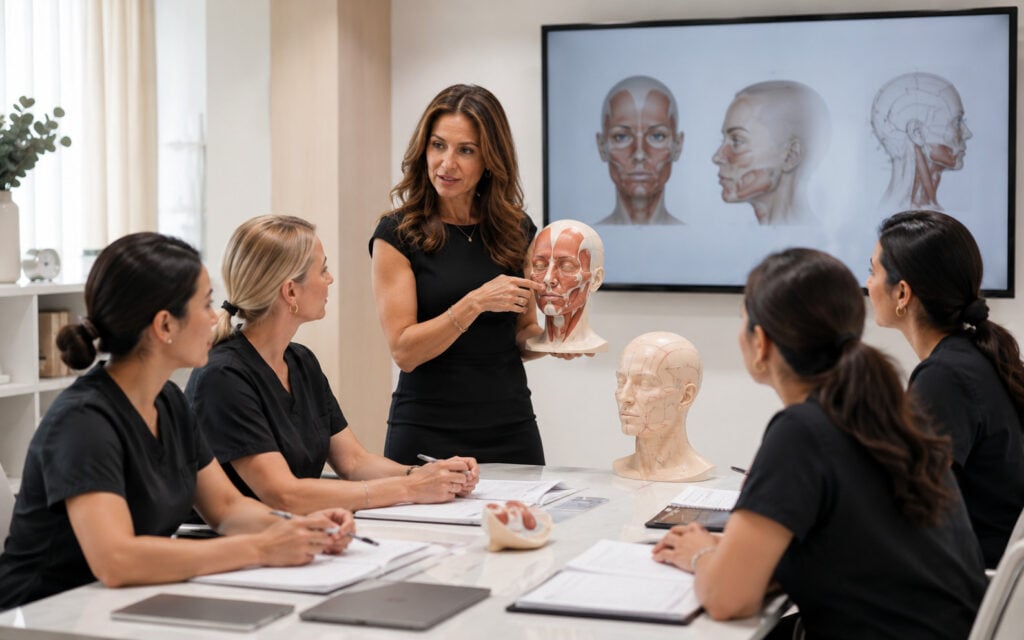
Facial anatomy at clinical depth. Understanding the muscles, nerves, blood vessels, and anatomical planes of the face is not optional background knowledge, it is the foundation of safe injection technique. A nurse who does not know the location of the facial artery, the supratrochlear and supraorbital vessels, the angular artery, or the anatomical variants that increase vascular risk cannot safely perform filler injections in the midface, forehead, nose, or perioral regions. Training should include detailed anatomical study of all major treatment zones, with particular attention to the vascular structures and danger zones relevant to each region.
Product pharmacology. You must understand how botulinum toxin A works, its mechanism of action, onset, duration, diffusion characteristics, dosing conventions, and differences between available products. You must understand hyaluronic acid chemistry, filler rheology, why different products are suited to different anatomical planes and treatment goals, and how the properties of a product affect injection technique. You must also understand biostimulators, PRP, and any other product category relevant to your practice.
Patient assessment and contraindication recognition. The pre-session assessment is a clinical obligation, not a protocol checkbox. Training should teach nurses how to conduct a structured patient assessment before each session, how to identify red flags in patient history and presentation, what contraindications exist for each type of product and treatment, and how to recognize when a patient should not be treated.
Injection technique and live-model practice. Theoretical knowledge without supervised hands-on practice is insufficient preparation for clinical practice. Training must include supervised injections on live models, with direct feedback from an experienced educator. Volume and variety of supervised practice matter: a single live-model session at the end of a theory course is not the same as repeated supervised practice sessions across multiple treatment zones.
Complication recognition and management. Every nurse injector must know how to recognize a vascular occlusion, how to assess skin blanching and assess capillary refill, what the warning signs of impending necrosis look like, and what to do in the minutes following the recognition of a serious complication. Training must include the emergency administration protocol for hyaluronidase. It should also cover anaphylaxis management, haematoma management, and infection assessment.
The Quebec regulatory framework. Training for Quebec nurses should include the individual-order requirement, the physician or dentist availability rules, the distinct scopes of registered nurses, IPSs, and auxiliary nurses, the unresolved medical-aesthetics questions specific to IPS prescribing and medical-director roles, deontological duties, insurance requirements, and the evolving inter-order framework. Training from another province or country may not address these Quebec-specific distinctions.
Documentation and record keeping. Clinical documentation is a professional obligation, and nurses should leave their training knowing how to write complete, accurate, legally adequate clinical notes.
AMEQ Academy’s programs for nurses are designed to address these educational requirements, led by physician educator Dr. Angelina Guzzo, BSc, PhD, MDCM, FRCPC, Specialist in Anesthesia, with aesthetic medicine education experience since 2014. Programs include comprehensive facial anatomy modules, supervised live-model practical sessions, and coverage of the Quebec regulatory framework, delivered in Montreal and Saint-Sauveur, Quebec.
Completing training is the beginning, not the end, of your professional development in aesthetic medicine. Continuing education, maintaining competency through regular clinical practice, and updating your knowledge as products, techniques, and regulations evolve are ongoing obligations under your Code de déontologie.
The 2026 Inter-Order Framework: What Nurses Should Expect
The joint initiative announced by the CMQ, ODQ, OIIQ, and OIIAQ in November 2025 is one of the most significant regulatory developments in Quebec aesthetic medicine in years. Understanding what it may mean for nurses is important for anyone planning their career in this field.
The initiative aims to define common parameters for professionals providing medical-aesthetic care: shared rules about roles, responsibilities, collaboration, and safety across physicians, dentists, registered nurses, IPSs, and auxiliary nurses.
What the framework might address includes clearer conditions for nursing practice in different clinic models; the role and availability of physicians or dentists during nursing sessions; training or competence expectations; the auxiliary nurse’s role; the specific status of IPS prescribing, self-administration, and medical-director functions in medical aesthetics; documentation and advertising standards; and emergency-readiness requirements.
What the framework is very unlikely to do:
- Eliminate the individual order requirement.
- Eliminate the requirement for timely access to an appropriately qualified physician.
- Expand the auxiliary nurse’s scope to include independent patient evaluation.
- Remove the professional accountability of each practitioner.
The direction of regulatory travel in Quebec aesthetic medicine has been consistently toward tighter requirements, more specific obligations, and more active enforcement. The common framework is expected to consolidate existing requirements and address gaps, not to loosen them.
For nurses who are already practising compliantly under the current framework, the expected impact is manageable: the framework should clarify and systematize what good operators are already doing. For nurses whose current practice does not meet existing requirements, the framework represents an additional enforcement mechanism.
Until the framework is published, the current rules remain fully in effect. Monitor the websites of the CMQ (cmq.org), OIIQ (oiiq.org), OIIAQ (oiiaq.org), and ODQ (odq.qc.ca) for updates and publications.
Practical Checklist: Before You Accept Your First Aesthetic Patient
For a nurse preparing to begin or continue aesthetic medicine practice in Quebec, the following items should all be confirmed before you begin treating patients:
Clinical preparation: You have completed training that covers facial anatomy to clinical depth, product pharmacology, patient assessment, injection technique with supervised live-model practice, and complication recognition and management, including hyaluronidase administration.
You can perform a complete pre-session nursing assessment and identify the contraindications that would require deferring treatment.
You are confident in your knowledge of the products you will be using, including their mechanisms, risks, contraindications, and appropriate injection planes and doses.
You have reviewed and understand the current OIIQ guidelines for nurses in aesthetic medicine.
Regulatory compliance: You will only treat patients under a valid individual order from a physician (or, for BoNT-A/filler treatments in the ODQ scope, a dentist with the appropriate training level) who has evaluated the patient in person.
You will confirm before each physician-ordered session that a competent responsible physician can be with the patient within 15 minutes if required. For a dentist-issued order, you will confirm that the ODQ’s applicable on-site presence requirements are satisfied.
You will confirm before each session that hyaluronidase, an emergency kit, and a defibrillator are available at the clinic.
You have reviewed the individual order and verified that it is complete, valid, and within your training and competence to execute.
You understand the conditions under which you may and may not adjust the treatment plan.
Insurance and business: You have confirmed with the OIIQ or your insurer that your current coverage applies to your specific practice activities.
If you are practising independently or owning a clinic, you have additional commercial liability coverage appropriate to your clinic operations.
You have spoken with a Quebec accountant and legal adviser about your business structure.
Documentation: You have a system for maintaining complete clinical records of each patient treatment, accessible to you and to the prescribing physician as required.
You have a system for obtaining and storing patient consent that meets Quebec’s privacy requirements.
IPS-specific verification: If you are an IPS, you have obtained written OIIQ clarification about whether your specialty class and the current medical-aesthetics framework permit you to prescribe the proposed treatment independently, administer a treatment you prescribed, issue orders to other nurses, or act as the responsible medical authority or medical director. Until that clarification is obtained, you
should
not rely on training, a general interpretation of section 36.1, or an informal verbal opinion as authority for independent aesthetic prescribing.
Frequently Asked Questions
Can nurses perform aesthetic injections in Quebec?
Registered nurses and auxiliary nurses may administer certain aesthetic treatments when the act is within their professional activities, competence, and insurance coverage, and when the required patient-specific evaluation, treatment plan, individual order, clinic conditions, and physician or dentist collaboration requirements are satisfied. Training alone does not create authorization.
Does a nurse need an individual order for aesthetic injections?
Yes. Quebec’s current aesthetic-medicine framework requires a patient-specific individual order for nurse-administered aesthetic injections. The patient must first receive the required in-person evaluation from an authorized prescriber, and the order must contain enough detail for the nurse to execute the treatment safely.
Can an IPS prescribe aesthetic injectables independently?
The general statutory activities of an IPS do not by themselves resolve every medical-aesthetics question. Until the OIIQ provides specific written clarification for the practitioner’s specialty class and proposed model, an IPS should not assume that training alone authorizes independent aesthetic prescribing, self-ordering, orders to other nurses, or a medical-director role.
Can an auxiliary nurse work independently as an aesthetic injector?
An auxiliary nurse may administer eligible substances under an individual order but cannot independently replace the professional responsible for patient evaluation, diagnosis, prescribing, or treatment planning. The auxiliary nurse must practise within competence, verify the order, monitor and document care, and ensure the required physician collaboration and emergency conditions are in place.
Must the physician already be inside the clinic during every nurse injection?
For physician-ordered treatment, the CMQ requires the responsible physician to be accessible and available to be with the patient within 15 minutes after an injection. The clinic must have a realistic operational arrangement that satisfies this requirement. Telephone or video availability alone is not sufficient when the physician cannot attend within that time. Dentist-issued orders are subject to the ODQ’s separate on-site requirements.
Can a nurse adjust an aesthetic treatment plan?
A registered nurse may adjust treatment only when the individual order contains an explicit adjustment protocol defining the permitted changes, parameters, and referral conditions. An auxiliary nurse cannot independently adjust medications or injectable substances.
What insurance does a nurse injector need?
The nurse must maintain professional liability coverage and confirm that aesthetic-medicine activities and the proposed practice model are covered. Clinic owners and contractors should also assess commercial general liability, premises, privacy, cyber, employer, equipment, and other business risks. Current coverage terms should be confirmed in writing with the OIIQ, OIIAQ, or insurer.
What should injectable training for Quebec nurses include?
Training should include clinically relevant facial anatomy, product pharmacology, patient assessment, contraindications, supervised live-model practice, complication recognition and management, documentation, consent, emergency readiness, and the Quebec professional framework. Completing training is a foundation for continued professional development, not independent authorization.
Official Sources and Further Reading
- CMQ: Médecine esthétique, observations et responsabilités, November 23, 2023
- CMQ: Pour une protection du public accrue en matière de médecine esthétique, May 30, 2024
- OIIQ: Médecine esthétique, garantir des soins sécuritaires et de qualité, May 30, 2024
- OIIQ: Exercer en soins médico-esthétiques, obligations déontologiques, November 28, 2025
- OIIAQ: Pharmacothérapie and medical-aesthetics practice questions
- OIIQ: Professional liability insurance
- OIIQ: Nursing practice in the private sector
- CMQ: Four-order collaboration on medical-aesthetic care, November 28, 2025
- ODQ: Botulinum toxin A and filling agents for dentists
Professional Responsibility Notice
This article provides educational information about the regulatory framework for registered nurses, Nurse Practitioners or IPSs, and auxiliary nurses in aesthetic medicine in Quebec. It does not constitute legal advice, an official interpretation by the OIIQ, OIIAQ, CMQ, or any other professional order, or authorization to perform, prescribe, direct, or supervise any procedure.
The information in this article reflects official sources reviewed as of July 2026, including the CMQ Guide d’exercice, La médecine esthétique (août 2020), the Avis conjoint CMQ-OIIQ (30 mai 2024), the joint inter-order communiqué (28 novembre 2025), the Loi sur les infirmières et infirmiers (RLRQ c. I-8), the Code des professions (RLRQ c. C-26), and the Code de déontologie des infirmières et infirmiers (RLRQ c. I-8, r. 9).
Regulations and professional guidance are subject to change. The four-order inter-order framework announced in November 2025 was expected to be published during 2026 and may modify some of the requirements described in this article.
Every nurse, including every IPS, must confirm current obligations directly with the OIIQ or OIIAQ, with the professional liability insurer, and with qualified legal counsel before beginning or continuing aesthetic medicine practice. Completing training at AMEQ Academy does not independently authorize injections, prescribing, self-ordering, or a medical-director role; does not constitute CMQ, OIIQ, OIIAQ, or ODQ approval; and does not expand professional scope.
Prepared by AMEQ Academy. Reviewed and approved by Dr. Angelina Guzzo, BSc, PhD, MDCM, FRCPC, Specialist in Anesthesia and aesthetic medicine educator since 2014. Regulatory information reviewed July 20, 2026.
What CMQ and OIIQ guidance means for nurse injector training
The OIIQ is the Ordre des infirmières et infirmiers du Québec, and the CMQ is the Collège des médecins du Québec. Their guidance addresses professional responsibilities and the medical framework. It does not endorse a particular private course.
When comparing nurse injector training, verify eligibility, supervision, patient-specific orders, assessment responsibilities, documentation and professional liability. Consult the OIIQ source and the current AMEQ nurse training page.