
Direct answer: Quebec dentists entering aesthetic medicine should use the current ODQ guide to confirm the required progressive training level, patient-experience thresholds, individual-order responsibilities for nurses, and on-site obligations. This page explains the requirements. Compare Botox training for dentists in Quebec using the companion course-comparison page.
Key Takeaways for Quebec Dentists
Dentists in aesthetic medicine in Quebec may provide botulinum toxin A and, at Level 4, filling-agent treatments only within the ODQ’s progressive framework. The pathway includes Level 1 theory, supervised clinical training, patient-experience thresholds, patient-specific examination and planning, and strict conditions when a nurse administers treatment. Training does not constitute ODQ approval or automatic authorization.
Educational reference for Quebec dentists considering or currently practising botulinum toxin A and dermal filler treatments. This article does not constitute legal advice, an official ODQ interpretation, or authorization to perform any procedure. Always confirm current requirements directly with the ODQ, your professional liability insurer, and qualified legal counsel before offering or modifying these services.
The publication of the Ordre des dentistes du Québec’s guide on botulinum toxin A (BoNT/A) and filling agents in March 2025 marked the most significant formal change to the scope of dentistry in Quebec in decades. For the first time, Quebec dentists had a clear, official pathway for offering injectable aesthetic treatments, with specific training requirements, graduated authorization levels, and explicit obligations.
That guide, updated in June 2025 and supplemented by an FAQ in September 2025, has generated substantial interest across Quebec’s dental community. It has also generated a degree of confusion, some overstatement by training providers, and a number of questions that the guide itself leaves partially or entirely unresolved.
This article works through the ODQ’s framework in full detail: what it confirms and what it does not, what the four training levels require and how progression between them works, what must happen in every patient encounter, what the dentist’s on-site obligations are, how collaboration with nurse injectors works under the current framework, what the therapeutic versus aesthetic distinction means for practice scope, and what the market opportunity actually looks like for dentists who enter this field with proper preparation.
The article also addresses some aspects of the current landscape that training providers occasionally obscure: the limits of what the ODQ guide covers, the treatments that are not yet authorized for dentists, and the professional obligations that apply regardless of commercial enthusiasm about the field.
Why Dentists Have a Natural Foundation for Injectable Aesthetics
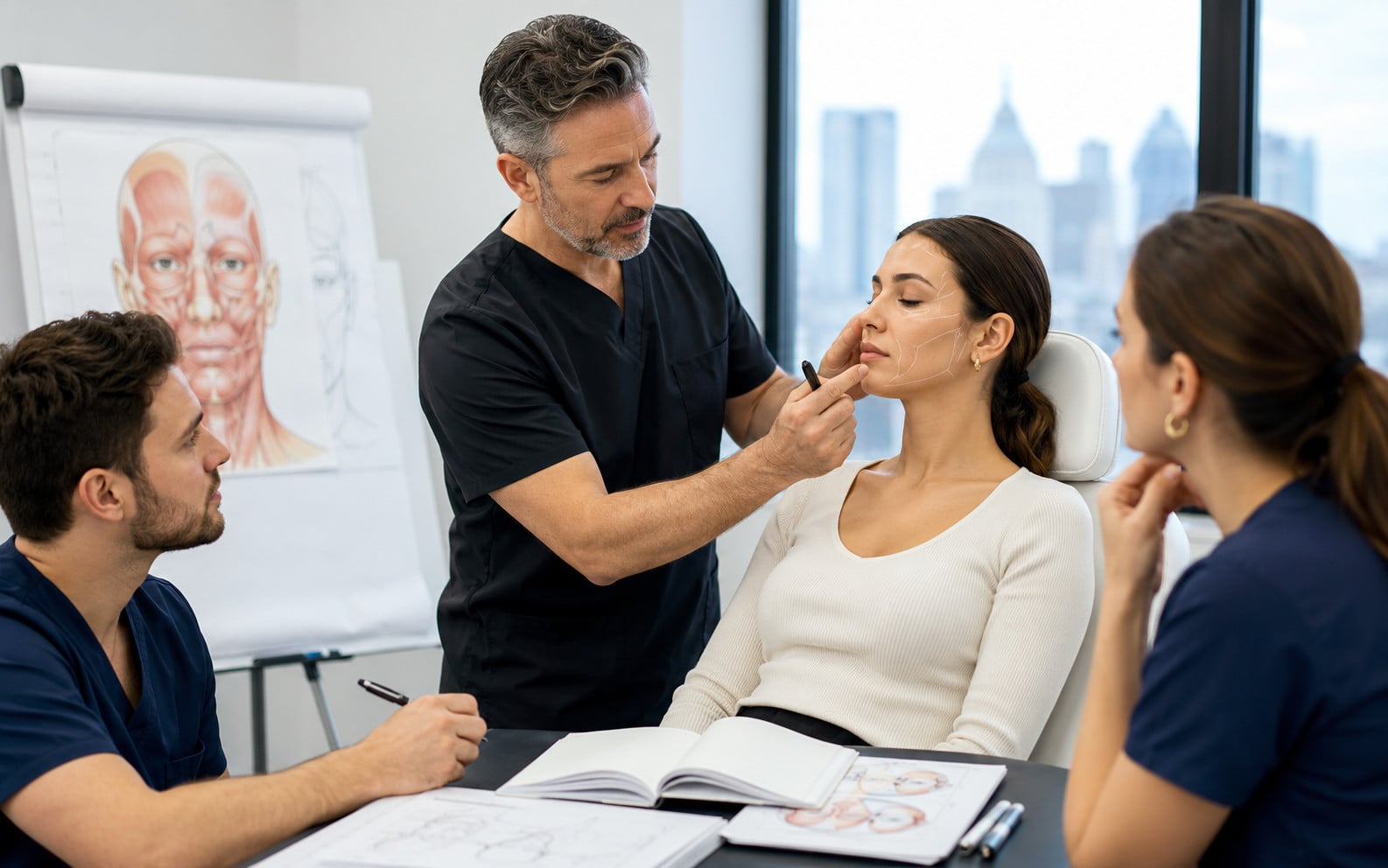
Before working through the regulatory framework, it is worth stating clearly why the ODQ’s guide makes professional sense, because the connection between dentistry and facial injectable aesthetics is not arbitrary.
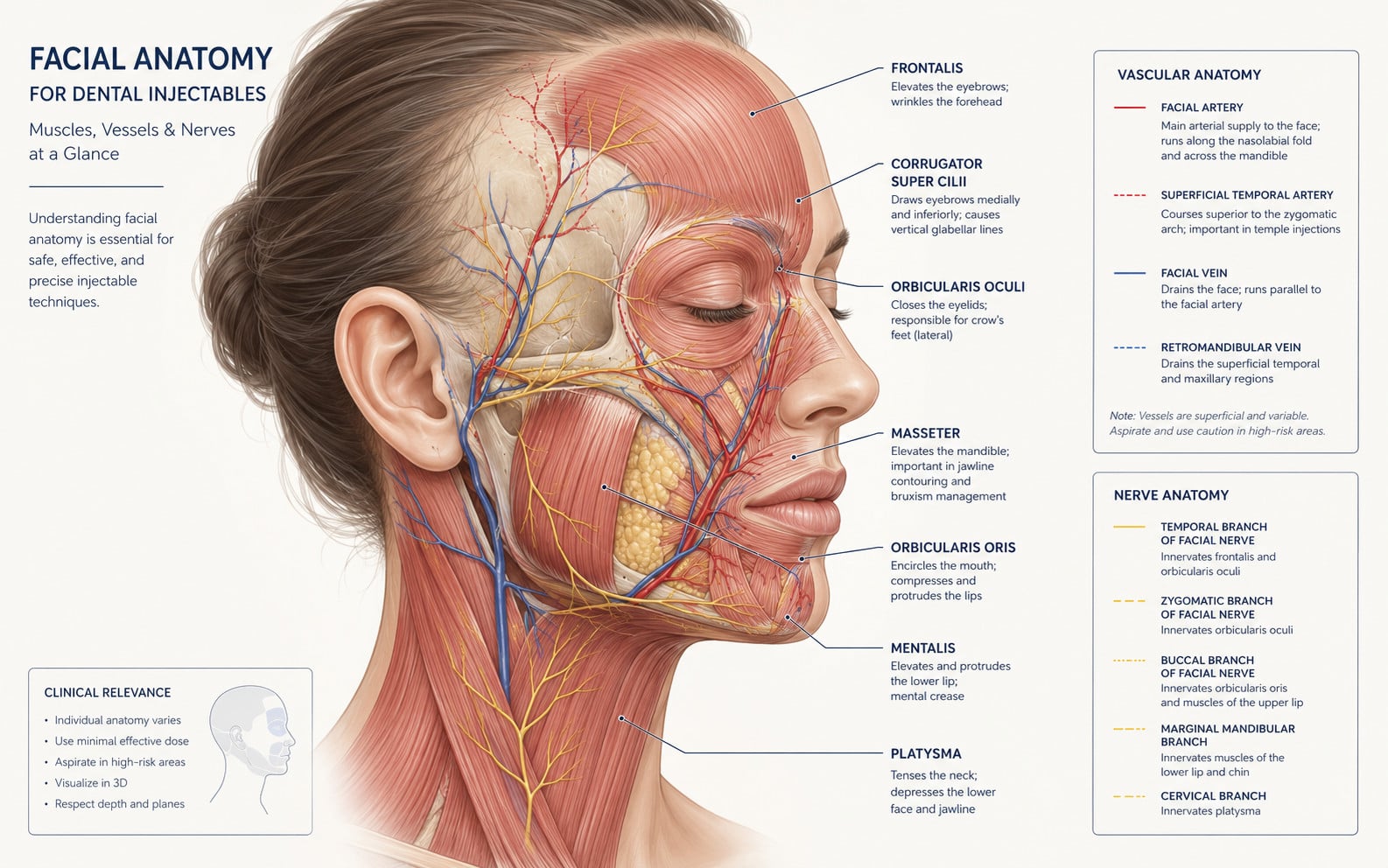
Dentists spend their entire professional careers working in one of the most anatomically complex regions of the human body. The facial musculature, the trigeminal nerve distribution, the vascular anatomy of the face and jaw, the bony structures of the mandible and maxilla, the temporomandibular joint and its surrounding muscle groups, the intraoral and perioral tissues, and the relationship between oral function and facial structure are all domains of core dental training.
More than this: dentists are among the most experienced injectors in healthcare. Every local anesthetic block a dentist has administered, whether an inferior alveolar nerve block, a mental nerve block, a buccal infiltration, or a palatal injection, involved precise needle placement in anatomically sensitive territory, with attention to vascular structures, patient response, and the potential for adverse events. The clinical confidence and technical precision that underlies good injectable aesthetic practice is something dentists have been developing throughout their careers.
The therapeutic applications are even more directly connected. Botulinum toxin A for bruxism and temporomandibular dysfunction sits squarely within the scope of dentistry’s traditional therapeutic domain. Managing masseter hyperactivity, reducing parafunctional clenching, addressing myofascial pain in the masticatory muscles, and treating some forms of temporomandibular disorder are all conditions that dentists already assess and manage. Adding botulinum toxin A as a treatment modality for these conditions is a natural extension of existing therapeutic work, not a departure from it.
The ODQ’s 2025 guide recognizes this connection explicitly. The Level 2 training pathway addresses both aesthetic applications in the upper face and therapeutic applications for bruxism and related conditions together, because the foundational anatomy and technique knowledge substantially overlap.
What the ODQ’s March 2025 Guide Actually Established
The Ordre des dentistes du Québec published its guide on March 27, 2025. The guide was amended on June 26, 2025, with modifications to specific pages. An FAQ addressing member questions was published on September 29, 2025. These three documents together form the current regulatory basis for dentist injectable practice in Quebec.
The guide establishes, for the first time in Quebec, a formal authorization pathway for dentists to use botulinum toxin type A (BoNT/A) and filling agents (dermal fillers) for aesthetic and therapeutic purposes, within the scope of dentistry. Directives took effect upon publication.
Before proceeding to what the guide confirms, it is worth being precise about what the guide is and is not. It is a practice directive from the professional order governing dentists in Quebec. It is not a statute and not a regulation enacted by the National Assembly. It represents the ODQ’s formal position on what falls within the professional scope of Quebec dentists in this area, and compliance is a condition of professional practice in good standing. Training providers who describe it as a “new law” are not using accurate language, though the practical effect of an ODQ directive is comparable in terms of professional obligation.
The guide does not certify or pre-approve any training provider or training program. A statement by a training provider that their course is “ODQ-certified,” “ODQ-approved,” or equivalent is not accurate, because the ODQ does not certify or approve training programs in this field. The ODQ defines content requirements; each dentist is responsible for selecting training whose content meets those requirements, and for confirming independently that it does.
What the Guide Confirms
Quebec dentists who complete the ODQ’s defined training pathway may use botulinum toxin A for aesthetic and therapeutic purposes in the anatomical regions and at the clinical levels corresponding to their completed training level.
Quebec dentists who complete the Level 4 training pathway may use dermal filling agents (filling agents) for aesthetic and therapeutic purposes in the authorized regions.
A dentist who has completed the required training level may issue an individual order to another authorized health professional (including a registered nurse or auxiliary nurse) to administer these treatments, subject to the conditions described later in this article.
What the Guide Does Not Confirm
The guide does not authorize dentists to offer every facial aesthetic treatment available in medical aesthetic clinics. Specifically, when the ODQ was asked in September 2025 whether dentists may also perform microneedling, photomodulation, and similar treatments, the ODQ responded that it is analyzing the question and will respond at a later date. As of July 2026, no ODQ position on microneedling, platelet-rich plasma (PRP), thread lifts, laser treatments, intense pulsed light, radiofrequency, or other energy-based or non-injectable facial aesthetic procedures for dentists has been confirmed. These treatments are not authorized by the 2025 guide and should not be offered under the assumption that the guide’s authorization extends to them.
The guide does not establish that performing these treatments under its framework constitutes medical practice. Aesthetic medicine is defined by the CMQ as a medical act. Dentists operating within the ODQ guide are acting within their professional scope as defined by their own order, not as performing medicine. The regulatory supervision and disciplinary authority comes from the ODQ, not the CMQ.
The guide does not reduce or eliminate any of the existing professional obligations of a dentist. All obligations under the Dentists Act, the Code of ethics of dentists, the regulation on dental office standards, and the Code des professions continue to apply in full.
The Four-Level Progressive Training Pathway: What Each Level Requires and Authorizes
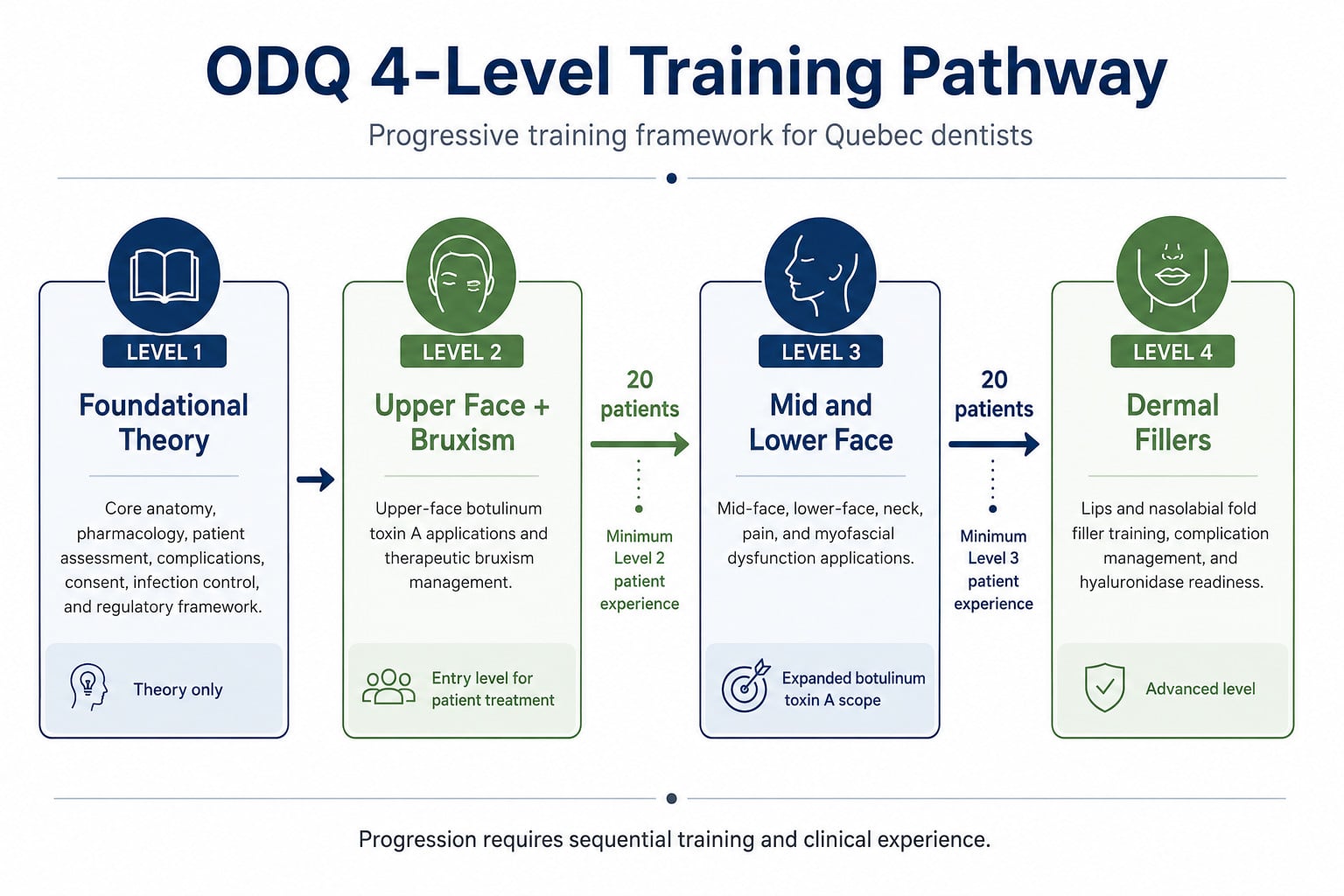
The ODQ guide structures dental injectable education into four progressive levels. This progression is intentional: each level builds on the previous one, and the clinical experience thresholds between levels reflect the ODQ’s assessment of what is needed before expanding scope.
No level may be skipped, regardless of prior experience, confidence, or the completeness of training taken before the guide was published. A dentist who completed an injectable course several years ago and who has been using botulinum toxin A therapeutically without a formal ODQ-aligned pathway is not automatically at Level 3 or Level 4. They are at whatever level corresponds to their conforming training and their compliant clinical experience under the guide’s framework.
Level 1: Foundational Knowledge
Level 1 is the theoretical prerequisite for the later hands-on levels. It does not authorize patient treatment. Under the ODQ guide, Level 1 is entirely theoretical, should include a minimum of 16 hours, and establishes the head and neck anatomy, patient-examination, botulinum toxin A, safety, documentation, and follow-up foundation required before progressing to clinical training.
The ODQ Level 1 content includes anatomy of the head and neck, including the temporomandibular joint, skin, muscles, nervous system, and vascular system; the processes and stages of facial and neck aging; the complete oral examination for therapeutic care and examination of the adjacent tissues involved in aesthetic botulinum toxin A treatment; methods for identifying bony and muscular structures, including palpation and marking; identification of injection sites and techniques; ongoing evaluation of treatment effectiveness and patient follow-up; calibrated clinical photography; integration of botulinum toxin A into oral-health treatment plans; indications and contraindications for extraoral aesthetic botulinum toxin A treatment; treatment risks; and the management of possible complications.
The ODQ guide does not require Level 1 to include dermal filler pharmacology, filler rheology, or hyaluronic acid theory. Its Level 3 curriculum introduces filling agents, while Level 4 addresses advanced filler content and clinical use. AMEQ Academy takes a broader educational approach in Step 1 by including basic and advanced dermal filler theory, hyaluronic acid principles, and filler complication recognition and management in the online curriculum. This early online foundation gives dentists a reference resource they can revisit before the later lecture-based Level 3 and Level 4 components. It is an AMEQ curriculum decision and should not be described as an ODQ Level 1 requirement, certification, endorsement, or approval.
Level 2: Aesthetic Upper Face and Therapeutic Bruxism Management
Level 2 is the entry level for patient treatment with botulinum toxin A. It authorizes two clinical domains simultaneously, reflecting their shared anatomical foundation.
Aesthetic applications at Level 2 include the upper face: the glabellar complex (procerus and corrugator muscles), the frontalis (forehead lines), and the periocular region (orbicularis oculi, including treatment of crow’s feet and brow position adjustment). These are the highest-volume aesthetic BoNT/A treatment sites and the starting point for aesthetic practice.
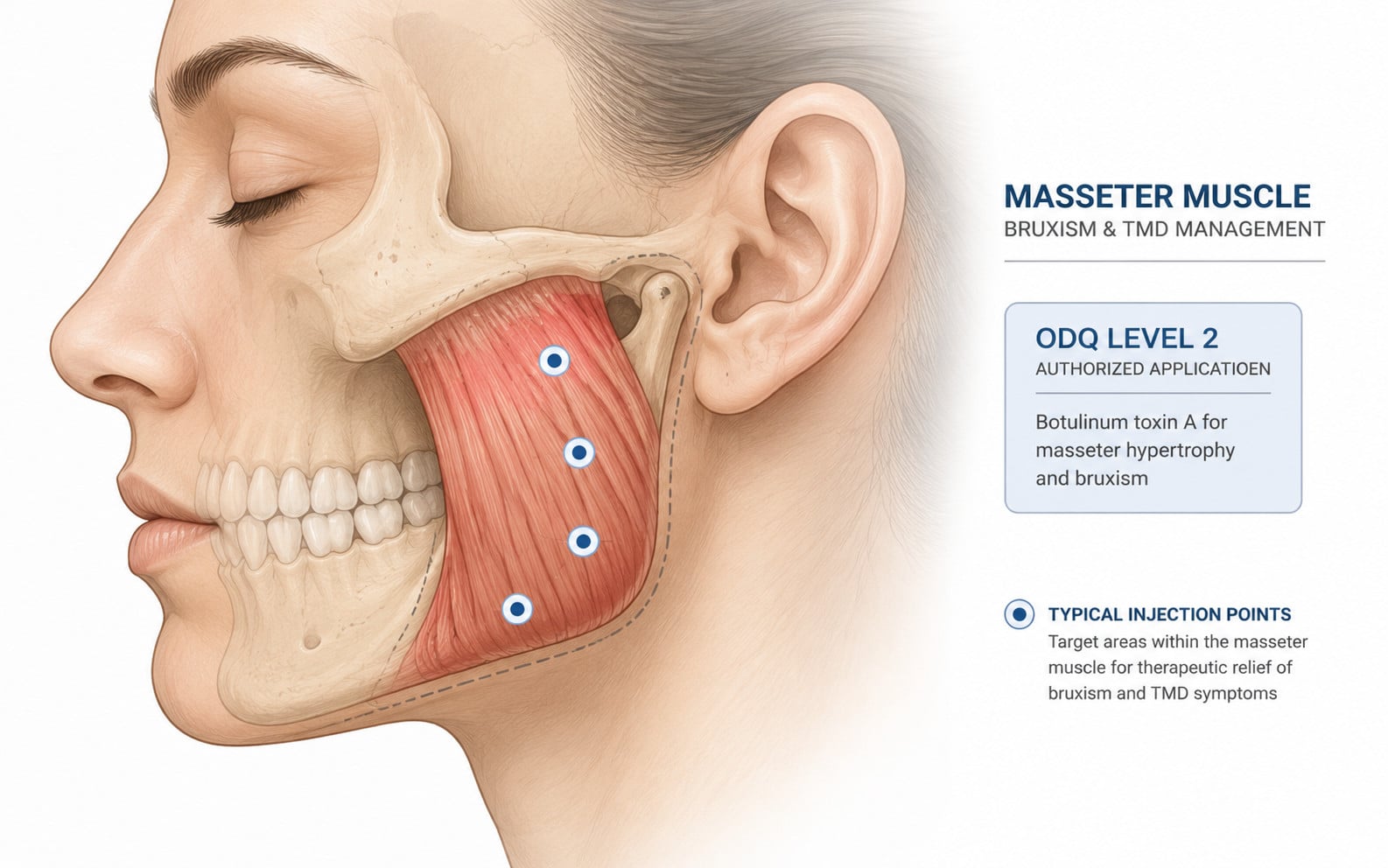
Therapeutic applications at Level 2 include the management of bruxism (masseteric hypertrophy, parafunctional clenching, and jaw-related pain), and related temporomandibular dysfunction where botulinum toxin A is a clinically appropriate therapeutic option within dental scope.
After completing Level 2 training and beginning to treat patients, the ODQ recommends a waiting period of approximately six months before advancing to Level 3 training. This interval is described as recommended, not mandatory. Its purpose is to allow the dentist to observe treatment results over the natural course of the treatment effect, to handle any complications that arise, and to deepen their clinical experience with the procedures at their current level before expanding scope.
Training programs that offer Level 2 and Level 3 content in a single intensive course are not consistent with the ODQ guide’s intent, because the six-month observation interval cannot occur within the same course. Dentists should evaluate training program structure against the guide’s intent as well as its specific requirements.
Level 3: Mid and Lower Face, Neck, and Expanded Therapeutics
Before a dentist may access Level 3 training, they must demonstrate that they have treated a minimum of 20 patients with botulinum toxin A within the Level 2 scope of practice.
A critical clarification from the ODQ’s June 2025 guide modification and September 2025 FAQ: this threshold of 20 patients applies to the combined Level 2 treatment categories as a whole. It is not 20 patients for aesthetic upper-face treatments and 20 separate patients for bruxism therapeutics. The minimum is 20 patients across the specified Level 2 categories together.
Level 3 expands the botulinum toxin A scope to the middle and lower face and the neck, including: the midface (zygomaticus, risorius, buccinator, and related muscles); the lower face (mentalis, depressor anguli oris, depressor labii inferioris, platysmal bands, and perioral muscles including orbicularis oris); the neck (platysma); and therapeutic applications including pain management and myofascial dysfunction beyond the basic bruxism indication established at Level 2.
These are anatomically more complex treatment zones. The lower face and perioral region involve a dense network of vessels, nerves, and muscles that require more precise technique and deeper anatomical knowledge than upper-face treatments. Level 3 is not a natural progression for practitioners who have not fully consolidated their Level 2 clinical foundation.
Level 4: Dermal Filling Agents
Before accessing Level 4 training, the dentist must have treated a minimum of 20 patients with botulinum toxin A within the Level 3 scope of practice, that is, the mid and lower face, neck, pain, and myofascial dysfunction treatment categories combined.
Level 4 introduces dermal filling agents (filling agents, not only hyaluronic acid products but other FDA/Health Canada-approved filling agents as appropriate). The authorized regions for dermal filler use at Level 4 include those relevant to dental scope, which is currently limited to the lips and nasolabial fold.
Dermal fillers carry a different risk profile than botulinum toxin A. Intravascular injection of hyaluronic acid filler can cause immediate or delayed vascular occlusion, leading to tissue necrosis. The antidote, hyaluronidase, must be available immediately when filler injections are being performed. This is not optional. It is a patient safety requirement that must be satisfied before any Level 4 treatment session begins.
Level 4 training must include: the pharmacology and physical chemistry of filling agents; injection techniques appropriate to each treatment region; the recognition and emergency management of vascular complications from filler injection; the administration of hyaluronidase as an antidote; patient assessment and selection for filler treatments; and contraindication recognition specific to filler use.
What Must Dentists in Aesthetic Medicine in Quebec Confirm Before Treating a Patient?
The ODQ guide is not permissive about the sequence of events required before a dentist may administer injectable aesthetic treatments to a patient, or authorize another professional to do so. Every patient encounter must follow a defined clinical pathway.Clinical Examination
The dentist must conduct a thorough clinical examination specific to the aesthetic or therapeutic concern being addressed. In aesthetic medicine, the examination must include: a review of the patient’s relevant medical and dental history; documentation of current medications, supplements, and prior treatments relevant to the planned procedure; an assessment of the patient’s anatomical presentation in the intended treatment zones; identification of any contraindications to the proposed treatment or product; and an assessment of the patient’s aesthetic goals and expectations.
The examination must be performed in person. Unlike the CMQ’s regulations, the ODQ’s guide does not explicitly address telemedicine in the same language that the CMQ uses. However, the requirement to perform an examination and establish a diagnosis is inherently a requirement for in-person clinical assessment. An examination conducted through photographs or video cannot satisfy the clinical requirements described in the guide.
Diagnosis
Following the examination, the dentist must establish a diagnosis. The diagnosis frames the clinical indication for treatment. For aesthetic procedures, this involves the dentist’s clinical assessment of the patient’s anatomical presentation, the identification of the condition being addressed (for example, dynamic forehead rhytids, masseter hypertrophy associated with bruxism, or perioral volume loss), and the determination that the proposed treatment is clinically appropriate for this patient’s specific condition.
This diagnostic step is not a formality. The ODQ requires dentists to practise within their training and competence at each level. A dentist who does not have the training or clinical judgment to establish a proper diagnosis before treating is not practising within their authorized scope.
Treatment Plan with Injection Mapping and Doses
Following the diagnosis, the dentist must formulate a written treatment plan. For injectable treatments, the guide’s requirements for ordering to a nurse make clear that the plan must include a specific mapping of injection sites and the doses to administer at each site. A treatment plan that says “treat the glabella with BoNT/A” without specifying injection points and units is not sufficient for issuing an individual order to a nurse, and should also not be considered sufficient for the dentist’s own treatment.
The specificity of injection mapping matters for patient safety. It prevents the addition of unauthorized sites during treatment, ensures that the treatment can be documented accurately, and provides the basis for evaluating results at follow-up.
Written Informed Consent
Before any treatment, the patient must provide written informed consent. The consent process must be completed by the dentist, not delegated to clinic staff. The patient must receive, understand, and consent to: the nature and purpose of the proposed treatment; the specific products to be used; the realistic expected outcomes and their duration; the possible adverse effects including common, uncommon, and rare risks; the risks specifically associated with injectable treatment in the face, including infection, bruising, asymmetry, ptosis, and vascular complications; the alternatives to the proposed treatment; the consequences of not treating; the fact that no outcome is guaranteed; the follow-up obligations; and the cost.
For patients with systemic conditions that may interact with injectable treatment, the consent process must specifically address those interactions and the precautions being taken.
Treatment Execution or Individual Order
If the dentist personally administers the treatment, the clinical pathway moves from consent directly to treatment, documentation, and follow-up.
If the dentist is issuing an individual order for a nurse to execute, additional steps apply and are described in the section below on ordering to nurses.
Post-Treatment Documentation and Follow-Up
Every treatment session must be documented in the patient’s clinical record. Documentation must include: the date and type of treatment; the products used, the specific sites treated, and the quantities administered at each site; the patient’s condition before and after treatment; any adverse events or unusual observations; the dentist’s name and signature; and any communications with the patient or with other professionals.
The dentist must also ensure follow-up is arranged for the patient. This includes informing the patient of expected recovery, what adverse events to watch for, how to contact the clinic if something changes, and when a follow-up appointment should occur to assess results.
The Individual Order: When Dentists Can Authorize Nurses to Administer Treatments
One of the significant operational aspects of the ODQ’s 2025 guide is its explicit confirmation that a dentist may issue an individual order to another licensed health professional to administer BoNT/A and filler treatments within the dentist’s authorized scope.
In practice, this most commonly means a registered nurse (infirmière). An auxiliary nurse may also be authorized to administer injectable substances under an individual order, but with significant additional constraints related to the auxiliary nurse’s scope of practice (they cannot evaluate the patient’s health status independently, so the dentist must perform the pre-session assessment).
The Six Conditions for Issuing an Order to a Nurse
The ODQ guide’s June 2025 modifications to page 8 clarified the conditions that must all be met before a dentist may issue an individual order to another health professional for these treatments. These are not suggestions: all six must be satisfied.
First: The dentist must have performed a clinical examination, established a diagnosis, and formulated a treatment plan that includes specific injection site mapping and doses.
Second: The dentist must ensure the professional being ordered is in good standing (habilité) for the reserved activities of their own profession. Specifically, the nurse being ordered must be authorized under their own professional order’s rules to perform the acts being ordered. A dentist cannot issue an order to an unregulated person, a cosmetician, or anyone who is not a regulated health professional with the relevant reserved activity within their authorized scope.
Third: The dentist must ensure the professional has the required training for the specific procedures being ordered. This means verifying that the nurse has received training in the specific procedures included in the order, that the nurse’s training is current, and that the nurse is competent to perform the procedures safely.
Fourth: The dentist must ensure the procedures being ordered do not exceed the professional’s training and competence. This is not simply about asking the nurse whether they feel confident. It is about the dentist satisfying themselves that the nurse has demonstrable training and experience with the specific procedures being ordered.
Fifth: The dentist must ensure the procedures being ordered do not exceed the dentist’s own current level of expertise. A dentist who is at Level 2 cannot issue an order for Level 3 or Level 4 procedures. A dentist who has completed Level 3 training but has not accumulated the required 20 patients to advance is at Level 3 with respect to their own treatment authority, but this limit also applies to what they can order a nurse to do. The dentist cannot order procedures they themselves could not lawfully perform.
Sixth: The dentist must be on site at the practice location where the order will be executed. “Sur place” means physically present at the location. Not at a nearby dental office. Not available by telephone. Not monitoring by video. Physically present at the specific location where the nurse will administer the injection.
All six conditions apply simultaneously. The absence of any one of them means the dentist cannot issue the order.
What the Individual Order Must Contain
When a dentist issues an individual order to a nurse for injectable aesthetic or therapeutic treatment, the order must include:
The dentist’s name, permit number, and contact information including telephone.
The patient’s identifying information.
The date of the order and its validity period.
The specific treatment plan: the injection sites with the specific mapping, the product to be used at each site, and the quantity or dose at each site.
The name of the nurse (or group of nurses) authorized to execute the order, and any relevant professional conditions the nurse must meet.
The complication management protocol, including the dentist’s contact information and an arrangement for managing adverse events, including the immediate availability of hyaluronidase when filler is being administered.
Contraindications, stop conditions, and the circumstances under which the nurse must contact the dentist immediately.
The Nurse’s Pre-Session Assessment Obligations
After receiving a dentist’s individual order, a registered nurse must conduct a pre-session assessment before each treatment session to confirm there are no contraindications to receiving the prescribed care on that specific day. If the nurse’s assessment reveals a change in the patient’s condition, the nurse must not proceed and must refer the patient back to the dentist prescriber.
For auxiliary nurses, the situation is more constrained: because auxiliary nurses cannot evaluate a patient’s health status independently, the dentist must conduct the pre-session assessment before each session and document in the clinical file that the patient may receive the prescribed care.

The On-Site Presence Requirement: What “Sur Place” Means in Practice
The requirement that the ordering dentist be “sur place” during the execution of a nurse’s treatment session is one of the most operationally consequential aspects of the ODQ guide. It is worth examining precisely.
The guide states that before issuing an order, the dentist must be on site at the practice location where the order will be executed. This means the dentist is physically present at that location when the nurse is administering the treatment.
This is not a remote supervision model. A dentist who writes an order and then leaves the premises does not satisfy the on-site requirement during the session. A dentist who is available by telephone while the nurse treats does not satisfy the requirement. A dentist who is in the dental operatory one floor above while the nurse treats in a separately managed aesthetic suite must assess whether they are genuinely “at the practice location” in the sense the guide intends.
The practical implication is significant: a dentist who wants to run a high-volume nurse-injector model across multiple clinic locations without being present at each location during sessions cannot do so compliantly under the current ODQ framework. The dentist’s on-site presence is not waivable.
This requirement serves a clinical purpose: dental-scope injectable treatments, like all aesthetic injectable treatments, carry a risk of complications that are best managed by an experienced practitioner who can assess and respond immediately. A complication during a nurse-administered filler session requires access to the dentist who ordered the treatment and who has the training to manage the adverse event.
Dental Office Requirements: The Practice Location Must Meet Dental Standards
The ODQ’s September 2025 FAQ confirmed what the guide implies: wherever botulinum toxin A and filler treatments are being administered under a dentist’s order, the location must meet the same standards as a dental office under the applicable regulation.
The Règlement sur la tenue des cabinets et des dossiers et la cessation d’exercice des membres de l’Ordre des dentistes du Québec (D-3, r. 16) establishes the standards that must be met. These include: appropriate records management and retention systems; a waiting room meeting professional standards; adequate asepsis and infection control practices; measures to protect patient confidentiality; a functional emergency kit; and a defibrillator.
This matters enormously for the business model. A dentist who wants to offer injectable services at a general aesthetic spa, a beauty salon, a shared commercial space, or any facility that does not meet dental office standards cannot do so under the current framework. The location must meet dental office requirements before treatments may be provided there.
Additionally, all locations where a dentist provides professional services, including locations other than a primary dental office, must be declared on the ODQ’s roll. The ODQ maintains a public record of each dentist’s declared practice locations. Undeclared locations cannot be used for professional services. Declared locations may be subject to inspection by the ODQ at any time.
This declaration obligation has real administrative implications for dentists who want to offer injectable services at clinics, surgical centres, or off-site locations. Before beginning to provide services at any new location, confirm that the location has been declared to the ODQ and that the declaration is current.
What the ODQ Guide Does Not Cover: Treatments Still Under Analysis
This section addresses a common source of confusion in the market: the scope of what the ODQ’s 2025 guide authorizes and what falls outside it.
The guide addresses botulinum toxin A and filling agents (dermal fillers). It does not address other facial aesthetic treatments, and the ODQ has specifically stated that it is analyzing the question of other treatments.
As of July 2026, the following have not been confirmed within the scope of dentistry under ODQ guidance: microneedling; platelet-rich plasma (PRP) injections; thread lifts (PDO threads or similar); laser treatments; intense pulsed light (IPL); radiofrequency facial treatments; and chemical peels.
A dentist who offers these treatments, or who markets them as part of their aesthetic medicine practice, is operating in territory where there is no ODQ authorization. The fact that these treatments are provided in aesthetic clinics alongside injectable treatments, and that some training providers include them in their programs, does not create authorization where the ODQ has not provided it.
Dentists interested in offering these treatments should monitor odq.qc.ca for any future ODQ guidance, and should confirm the current status directly with the ODQ before offering any treatment not covered by the March 2025 guide.
Prior Training: If Your Existing Courses Don’t Meet the Guide’s Requirements
Many dentists entered the injectable aesthetics field before the ODQ’s guide was published, completing training programs that were available in the market but that were not aligned with the ODQ’s framework because no such framework existed at the time. The guide addressed this transition situation.
For dentists who had been using botulinum toxin A for therapeutic purposes (bruxism and related conditions) before the guide was published: the ODQ allowed a transition period during which these practitioners could continue their therapeutic BoNT/A practice while completing training that conforms to the guide’s Level 2 requirements. The transition period was 12 months from publication, meaning it concluded in March 2026. Dentists who were in this category and have not yet completed conforming training should contact the ODQ directly to confirm their current status.
For dentists who had completed aesthetic BoNT/A or filler training before the guide was published, but whose training does not correspond to the guide’s content requirements: the ODQ’s position is that these dentists cannot offer those aesthetic services until they complete training that meets the guide’s requirements for the applicable level. Prior training that does not meet the guide’s content requirements does not grandfather the dentist into practice authorization under the guide.
This is a specific risk area for dentists who completed short weekend courses, product-focused training delivered by pharmaceutical representatives, or international training programs that did not cover the full scope required by the guide. The guide’s content requirements are detailed and comprehensive. A course that covered injection technique without covering complication management, vascular anatomy, and the regulatory framework is not a course that meets Level 1 requirements.
When evaluating whether your prior training meets the guide’s requirements, compare your course curriculum directly against the guide’s content requirements for each level. If there are gaps, those gaps need to be addressed through additional training before you practise at that level.
Therapeutic Applications: The Heart of the Dental Scope
Much of the market discussion about dentists in aesthetic medicine focuses on the aesthetic side: botulinum toxin A for wrinkles, fillers for lip augmentation. The therapeutic applications deserve equal attention, because they represent perhaps the most natural and most defensible entry point for many dentists.
Bruxism and Masseter Hypertrophy
Bruxism, the habitual involuntary grinding and clenching of teeth, affects a substantial portion of the population. It causes dental wear, tooth fracture, occlusal changes, and significant patient discomfort. Managing it has historically been the domain of dentistry through occlusal guards, cognitive behavioral approaches, and physiotherapy.
Botulinum toxin A injected into the masseter and temporalis muscles reduces muscle activity, providing relief from parafunctional clenching and the symptoms associated with it. The masseter injection also reduces the bulk of the muscle over repeated treatments, which can change the facial contour. This dual therapeutic and incidental aesthetic effect is fully within dental scope at Level 2.
For dentists who already manage bruxism patients, botulinum toxin A represents a clinical tool they can add to their existing therapeutic toolkit. These are patients the dentist already knows, whose dental health needs the dentist already manages, and whose bruxism-related concerns the dentist is already addressing. The therapeutic injectable adds a clinical option, not a commercial pivot.
Temporomandibular Dysfunction
Temporomandibular dysfunction (TMD) affects the muscles of mastication, the joint itself, or both. Myofascial pain in the masseter, temporalis, and pterygoid muscles can be debilitating. Conservative management (physiotherapy, occlusal guards, patient education) helps many patients but not all.
Botulinum toxin A injections for myofascial pain and temporomandibular dysfunction fall within the Level 3 therapeutic scope under the ODQ guide. For dentists with a patient base that includes significant TMD-related complaints, this represents a meaningful therapeutic expansion.
Hyperhidrosis
Hyperhidrosis of the palmar region (excessive sweating of the hands) is sometimes addressed with botulinum toxin A, and a dentist with Level 3 training may consider whether this falls within the therapeutic scope of the guide’s “traitement de la douleur et des dysfonctions myofasciales” category. This is an area where direct confirmation with the ODQ is warranted before offering the service.
Gummy Smile
Gummy smile (excessive gingival display on smiling) is treated with botulinum toxin A injections to the upper lip elevators. This is a condition with significant dental and aesthetic relevance, and the treatment technique overlaps closely with dental upper-lip anatomy knowledge. It would fall within the aesthetic scope of Level 3 at the mid-face level.
Deontological Obligations for Dentists in Aesthetic Medicine
The Code de déontologie des dentistes (D-3, r. 4) applies to all aspects of a dentist’s professional practice, including aesthetic injectable services. Several provisions are particularly relevant.
Competence: A dentist must only practise within the limits of their current training and competence. In injectable aesthetics, this means: treating only at the level for which they have completed the guide’s required training; refusing procedures they do not feel competent to perform safely; and not treating in anatomical regions or with products not covered by their completed training.
Honesty and accuracy in professional representations: A dentist must not make misleading claims about their training, credentials, or the scope of services they are authorized to provide. This applies directly to the question of ODQ authorization: a dentist cannot tell patients they are ODQ-certified, ODQ-approved, or certified by any other body if that certification does not exist. A dentist who has completed a training program should describe themselves accurately: “trained in botulinum toxin A injection at Level X of the ODQ guide” is accurate; “ODQ-certified injector” is not.
Professional independence: A dentist must maintain independence from commercial influences in clinical decision-making. A dentist who treats patients on the basis of revenue generation rather than clinical indication, who recommends treatments not appropriate for the patient’s condition, or who participates in commercial arrangements that compromise clinical judgment is violating the independence requirement.
Information to patients: A dentist must provide patients with accurate information about their condition, the proposed treatment, the risks, and the alternatives. Creating false expectations about outcomes is a deontological violation. Before-and-after photographs must not be presented as guarantees of outcomes.
Maintaining skills and knowledge: Like all health professionals, dentists are required to keep their skills and knowledge current. In aesthetic medicine, this means following developments in the field, updating training as new evidence or techniques emerge, and participating in relevant continuing education activities.
Professional Independence and the Commission Question
The prohibition on commission arrangements that compromise professional independence applies to dentists as it does to physicians. A dentist may not receive commissions, rebates, or material advantages tied to the referral of patients to specific products, suppliers, or services.
In aesthetic medicine, some commercial arrangements raise questions under this principle. A dentist who receives pharmaceutical products at no cost in exchange for purchasing a minimum quantity and directing patients to that product is in a potentially problematic arrangement. A dentist whose practice revenues are shared with a non-dental investor under a formula that incentivizes overtreatment is similarly exposed.
The general principle: a dentist’s clinical decisions about what to treat and how to treat it must be made on the basis of the patient’s clinical needs, not on the basis of financial arrangements that reward higher volumes. When evaluating any commercial arrangement involving aesthetic medicine revenues, the dentist should ask whether the arrangement could influence clinical decision-making in a way that prioritizes revenue over patient welfare.
Advertising: What Dentists in Aesthetic Medicine May and May Not Claim
The Code de déontologie’s advertising provisions apply to all dentist communications about their services, including injectable aesthetic services and social media content.
Prohibited claims and approaches:
A dentist cannot claim ODQ certification, ODQ approval, or a certification from the ODQ for their aesthetic training, because such certifications do not exist.
A dentist cannot use comparative or superlative language that diminishes another practitioner’s services (“the most experienced injector in Montreal,” “the best results in Quebec”).
A dentist cannot guarantee outcomes or present before-and-after photographs as typical results or as promises of what patients will achieve.
A dentist cannot advertise treatments that fall outside their authorized scope (for example, advertising microneedling or PRP when the ODQ has not confirmed these as within dental scope).
A dentist cannot use testimonials in a way that creates unrealistic expectations or that constitutes insistent solicitation.
Permitted and appropriate approaches:
A dentist may accurately describe the training they have completed and the treatments they are authorized to provide at their current level.
A dentist may use before-and-after photographs with appropriate consent and with disclaimers making clear that the photographs represent individual outcomes.
A dentist may describe the clinical benefits of available treatments in factual and scientifically accurate terms.
A dentist may describe the therapeutic rationale for treatments within dental scope, particularly for bruxism, TMD, and related conditions.
When developing advertising content, particularly for social media, dental clinics offering injectable services should have a compliance review process that evaluates each piece of content against the Code de déontologie’s standards before publication. The dentist remains personally responsible for all advertising about their services, regardless of whether an employee, marketing agency, or clinic management company produced the content.
Privacy and Record-Keeping Obligations
The regulation on dental clinical records applies to injectable aesthetic treatments as it does to all other dental services. Aesthetic medicine patient records must be maintained in the same compliant manner as dental records generally.
In Quebec, Loi 25 (the privacy modernization law) has been phasing in requirements since September 2022. Dental clinics offering aesthetic injectable services are subject to its provisions regarding: the collection and handling of patient personal and health information; the obligation to appoint a privacy officer responsible for the clinic’s compliance; obligations around privacy incidents (breaches), including notification to patients and the Commission d’accès à l’information when certain thresholds are met; and requirements about cross-border data transfers if using software or cloud services hosted outside Quebec.
Photography in aesthetic medicine raises specific privacy considerations. Before-and-after photographs are standard practice in aesthetic medicine and are valuable for clinical documentation and for evaluating treatment outcomes. However, they constitute sensitive personal health information and require explicit written consent specifying each use. Consent to photograph for clinical records does not authorize use in advertising, social media posts, staff training, or any other non-clinical purpose. Each distinct use requires its own consent.
If a dental clinic uses patient photographs in marketing or social media and does not have specific written consent for those uses, it is in breach of its privacy obligations. This is a common compliance gap.
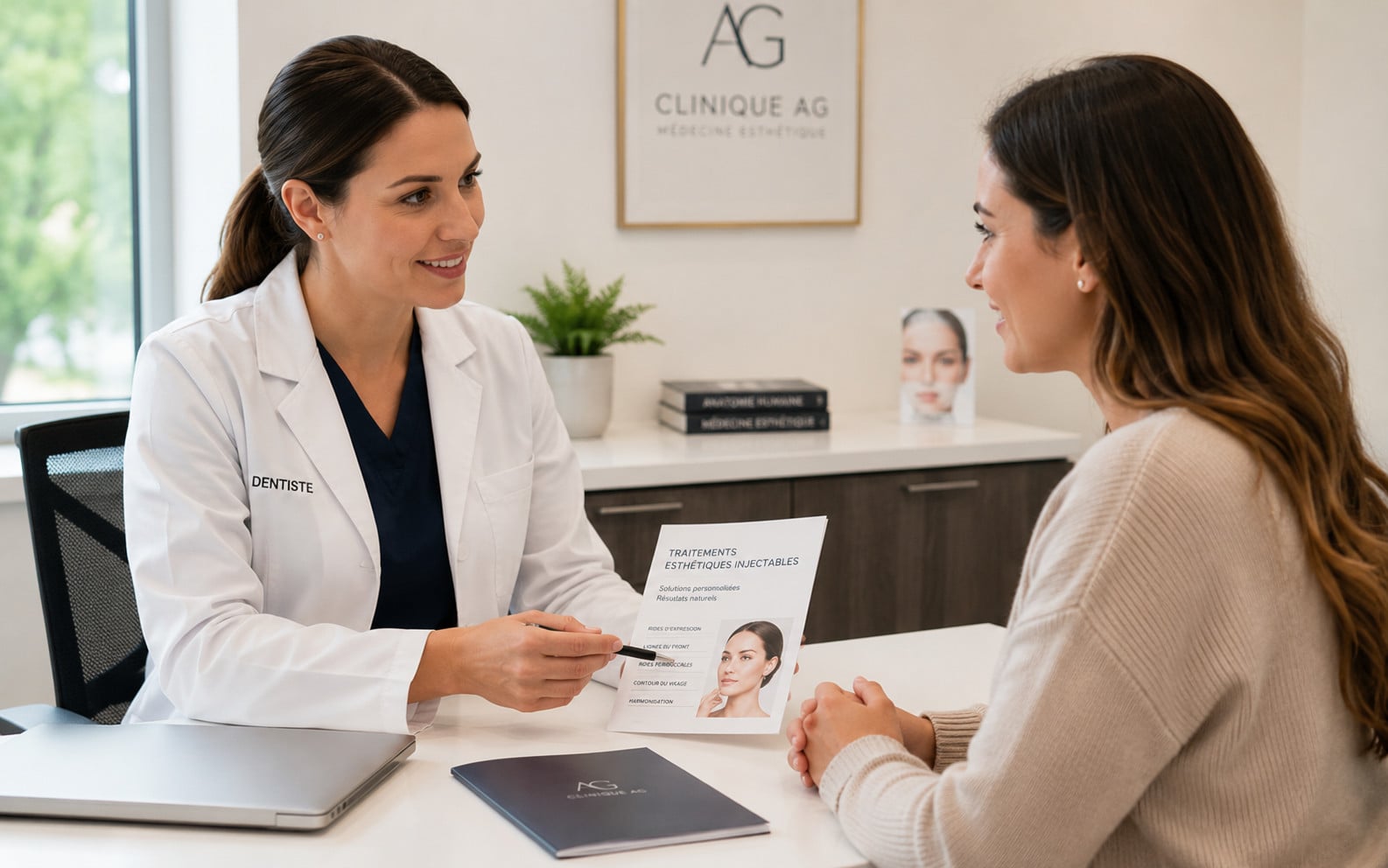
The Market Opportunity: What Aesthetic Injectable Practice Actually Offers Dentists
The regulatory framework described in this article represents what compliance looks like, not a deterrent to practice. Within that framework, there is a genuine and growing opportunity for dentists who enter this field properly.
Therapeutic Revenue and Patient Retention
For dentists who want to remain primarily in dental practice while adding injectable therapeutics, the immediate opportunity is in therapeutic botulinum toxin A for their existing patient base. Every dental practice has patients who grind their teeth, who wear occlusal guards, who report jaw pain and headaches on waking, and who are frustrated that conventional management is only partially effective.
Botulinum toxin A for masseter and temporalis injection offers these patients a clinical option they are not currently getting from their dentist, and that they may be seeking from neurologists, dermatologists, or medical aesthetic clinics without knowing their dentist is equipped to provide it. Treating these patients keeps them in the dental practice for this need, deepens the therapeutic relationship, and adds revenue from services that the dentist is uniquely positioned to provide based on their existing knowledge of the patient and the relevant anatomy.
The therapeutic side also supports patient wellness beyond the immediate injection. A patient whose bruxism is controlled with botulinum toxin A may experience less dental wear, fewer tooth fractures, and better occlusal stability over time, which is directly relevant to their long-term dental health and to the longevity of existing restorative work.
The Aesthetic Practice Extension
For dentists who want to add aesthetic services as a more significant component of their practice, the aesthetic applications at Levels 2 through 4 open a broader scope. Upper-face botulinum toxin A, mid and lower face BoNT/A, and ultimately dermal fillers give dentists access to a wide range of aesthetic injectable services that are in high demand.
The aesthetic injectable market in Quebec is not uniformly served. Concentration of trained practitioners in Greater Montreal and the immediately surrounding communities does not reflect the availability (or lack thereof) in regional cities, smaller communities, and semi-urban markets. A dentist in a regional Quebec city who completes proper training and offers injectable aesthetic services may find very little established competition and significant patient demand.
The cascade model also applies: a trained dentist who issues individual orders to nurse injectors can serve more patients than they could alone, while maintaining the clinical oversight the ODQ guide requires.
The Integration Advantage
Dentists have a practice structure that most aesthetic medicine providers do not: an established patient base with a healthcare relationship, a physical practice location that meets healthcare facility standards, existing clinical record systems, staff trained in patient care, and a professional reputation built over years of dental practice.
Adding injectable aesthetic services to a dental practice is an integration, not a startup from scratch. Existing patients are familiar with the dentist, trust the healthcare relationship, and are more likely to consider aesthetic or therapeutic injectable services from a provider they know than from a new clinic they would have to choose and evaluate from scratch.
The gummy smile treatment, the bruxism management, and the perioral rejuvenation that dentists can offer at various training levels are also services that are deeply connected to patients’ oral health identity and self-image, areas where the dentist-patient relationship is naturally engaged.
The 2026 Inter-Order Framework: What Dentists Should Monitor
The November 2025 joint initiative announced by the CMQ, ODQ, OIIQ, and OIIAQ to develop common parameters for aesthetic medicine practice will, when published, potentially affect dentists practising in this field.
For dentists, the framework may clarify: the conditions for on-site presence during nurse-administered sessions; collaboration protocols between dentist prescribers and nurse executors; documentation standards for interprofessional aesthetic treatment; and potentially the scope of additional treatments the ODQ may authorize in the future.
What the framework is very unlikely to do: authorize dental practice beyond the ODQ’s defined scope; reduce the training requirements for the four levels; eliminate the on-site presence requirement; or reduce any of the clinical obligations established in the 2025 guide.
Dentists should monitor odq.qc.ca regularly for the ODQ’s publication of its contribution to the framework, and any updates to the guide that may accompany it.
The ODQ has also not yet responded to the question of whether dentists may perform microneedling, PRP, and other non-injectable aesthetic treatments. This response, if and when it comes, may be published as a separate ODQ position or incorporated into an update to the existing guide.

Review AMEQ Academy’s botulinum toxin A training pathway for Quebec dentists, including Step 1 online theory and supervised Step 2 practical education.
What to Look for in Injectable Training for Dentists
Not all training programs are equivalent, and the variation in quality, depth, and clinical value in this market is significant. The ODQ guide’s content requirements provide a framework for evaluating programs, but the guide describes minimum content, not the ideal curriculum.
A high-quality injectable training program for dentists should provide:
Facial anatomy teaching that goes beyond what dental school covered, specifically addressing the muscles, nerves, and vascular anatomy of all treatment zones relevant to BoNT/A and filler practice, including the specific danger zones (the supratrochlear and supraorbital vessels, the angular artery, the facial artery and its branches, the labial arteries, and the risk zones for vascular occlusion in each region).
Across a complete four-level training pathway, pharmacology teaching should cover the mechanism of action, onset, duration, diffusion characteristics, and dose-response relationships of available botulinum toxin A products. Dermal filler education should cover basic and advanced pharmacology, rheology, tissue behaviour, product selection, vascular risk, and complication management before Level 4 clinical use. The ODQ does not require filler theory as part of Level 1. AMEQ’s educational approach is to introduce both basic and advanced filler theory, including complication management, in the online Step 1 curriculum so participants can return to the material, review risk concepts, and assess their understanding as they progress through the later Level 3 and Level 4 lectures and practical training.
Patient assessment and selection methodology that the dentist can apply in clinical practice: how to evaluate a patient for aesthetic or therapeutic injectable treatment, how to identify contraindications, how to assess realistic outcome expectations, and how to recognize when a patient is not an appropriate candidate.
Supervised live-model practice with direct instructor feedback, covering the specific injection techniques for each treatment zone within the relevant training level. A program that does not include live-model supervised injections is not adequate preparation for clinical practice.
Complication recognition and management, with enough clinical depth that a dentist who encounters a complication can recognize it, assess its severity, initiate appropriate management, and know when and how to escalate. For Level 4 (filler), this must specifically include recognition of vascular occlusion signs and the emergency administration of hyaluronidase.
The Quebec regulatory context, specifically the ODQ guide’s requirements, the on-site presence obligation, the dental office location requirements, and the individual order conditions. Training programs from other provinces or countries may not address these Quebec-specific requirements.
AMEQ Academy offers injectable training for dentists in Montreal and Saint-Sauveur, Quebec, led by Dr. Angelina Guzzo, BSc, PhD, MDCM, FRCPC, Specialist in Anesthesia and aesthetic medicine educator since 2014. Programs are developed with the ODQ guide’s requirements in mind and include comprehensive anatomy modules, supervised live-model practical components, and coverage of the Quebec regulatory framework. AMEQ also includes basic and advanced dermal filler theory, hyaluronic acid principles, and filler complication management in Step 1 as added preparation for the later Level 3 and Level 4 pathway. This added content is an AMEQ curriculum choice and is not an ODQ Level 1 requirement.
Completing AMEQ Academy’s dentist training programs does not constitute ODQ certification or approval, because no such certification exists. Dentists are responsible for independently confirming that the course content corresponds to the ODQ guide’s requirements for the level being pursued. To confirm program details and curriculum, contact education@cliniqueag.ca or call (514) 574-4636.
Practical Checklist: Before You Treat Your First Aesthetic or Therapeutic Injection Patient
For a dentist preparing to offer injectable aesthetic or therapeutic services, the following should all be confirmed before beginning:
You have completed Level 1 training covering the ODQ-required foundational content for anatomy, examination, botulinum toxin A, risk management, calibrated photography, and follow-up. You understand that filler theory is not an ODQ Level 1 minimum. Where a provider includes basic and advanced filler theory, hyaluronic acid principles, and filler complication management in Step 1, that content is supplementary preparation for the later Level 3 and Level 4 pathway.
You have completed Level 2 training, and you are beginning practice at Level 2 only. You will not offer Level 3 or Level 4 treatments until you have accumulated the required 20 patients at Level 2 and completed Level 3 training.
You have declared all practice locations where you will offer these services to the ODQ, and all locations meet dental office requirements including the availability of an emergency kit and a defibrillator.
You have confirmed with your professional liability insurer that your current policy covers aesthetic and therapeutic injectable treatments, and that any practice structure you are using (individual practice, partnership, corporation) is appropriately covered.
You have a system for conducting and documenting in-person clinical examinations, diagnoses, and treatment plans with injection mapping and doses, for each patient encounter.
You have a written informed consent process in place that covers all the elements required for aesthetic and therapeutic injectable treatments.
You have access to hyaluronidase at all locations where filler injections will be performed (Level 4 only), and you have confirmed it is stored appropriately and not expired.
You have emergency protocols in place for anaphylaxis and vascular occlusion.
If issuing orders to nurses: you have confirmed all six conditions are met (examination/diagnosis/treatment plan/consent done; nurse is in good standing; nurse has required training; procedures don’t exceed nurse’s training; procedures don’t exceed your own level; you will be on-site).
You have reviewed the ODQ’s guide in full, including the June 2025 modifications and the September 2025 FAQ.
FAQ
Can Quebec dentists provide botulinum toxin A treatments?
Yes, within the anatomical regions and clinical levels corresponding to the dentist’s completed ODQ training pathway, professional competence, patient-specific assessment, treatment planning, consent, documentation, and practice-setting obligations. Completing a private course does not constitute ODQ approval or remove the dentist’s responsibility to confirm current requirements.
Is dermal filler theory required in ODQ Level 1?
No. The approved article explains that ODQ Level 1 focuses on foundational theory for anatomy, examination, botulinum toxin A, safety, documentation, photography, and follow-up. AMEQ includes basic and advanced filler theory and complication management in Step 1 as supplementary preparation for the later Level 3 and Level 4 pathway.
When can a Quebec dentist use dermal filling agents?
The approved article places clinical dermal filler use at Level 4, after the dentist has completed the required progressive training and patient-experience pathway. Treatment must remain within the authorized regions, the dentist’s competence, current ODQ guidance, and the patient-specific evaluation and treatment plan.
Can a dentist issue an order to a nurse for aesthetic injections?
A dentist who has completed the applicable training level may issue an individual order to an authorized professional only when all ODQ conditions are met. These include the dentist’s examination, diagnosis, mapped treatment plan and doses, verification of the nurse’s authority and competence, and the dentist’s on-site presence.
Does the ODQ approve or certify training providers?
The approved article states that the ODQ defines training content requirements but does not certify or pre-approve private providers. Dentists must compare a program’s curriculum with the current ODQ guide and confirm requirements directly with the ODQ, their insurer, and qualified counsel where appropriate.
Are microneedling, PRP, lasers, or thread lifts covered by the 2025 ODQ guide?
The approved article states that the 2025 guide addresses botulinum toxin A and filling agents. As of the article’s July 2026 review, the listed non-injectable or additional procedures had not been confirmed within the guide. Dentists should obtain current ODQ confirmation before offering a treatment not covered by the guide.
Official ODQ Sources
- ODQ: Utilisation des toxines botuliques de type A (BoNT/A) et des agents de comblement à des fins esthétiques
- ODQ: Modifications apportées au guide, June 26, 2025
- ODQ: Questions and answers on botulinum toxin and filling agents, September 29, 2025
- ODQ: Professional practice standards and guides
- ODQ: Four professional orders collaborating on safer medical aesthetic care, November 28, 2025
Professional Responsibility Notice
This article provides educational information about the regulatory framework for dentists in aesthetic medicine in Quebec. It does not constitute legal advice, an official ODQ interpretation, or authorization to perform any procedure.
The information reflects official sources reviewed as of July 2026, including the ODQ Guide sur l’utilisation des toxines botuliques de type A (BoNT/A) et des agents de comblement (27 mars 2025), the Modifications au guide (26 juin 2025), the ODQ FAQ (29 septembre 2025), and the CMQ-ODQ-OIIAQ-OIIQ communiqué (28 novembre 2025).
Regulations and professional guidance are subject to change. The ODQ’s analysis of microneedling, PRP, and other non-injectable facial aesthetic treatments was ongoing as of July 2026. The four-order inter-order framework announced in November 2025 was expected to be published during 2026. Dentists must confirm current requirements directly with the ODQ and their professional liability insurer before offering or expanding these services.
Prepared by AMEQ Academy. Reviewed and approved by Dr. Angelina Guzzo, BSc, PhD, MDCM, FRCPC, Specialist in Anesthesia and aesthetic medicine educator since 2014. Published July 13, 2026. Updated July 17, 2026.
What ODQ means in Quebec aesthetic medicine
ODQ refers to the Ordre des dentistes du Québec. For dentists evaluating aesthetic medicine education, the ODQ guide and published updates are the primary sources. A school can describe how its curriculum maps to the guide, but it cannot claim that the ODQ approved the course.
After reviewing the ODQ source, compare current options using the dentist course comparison.